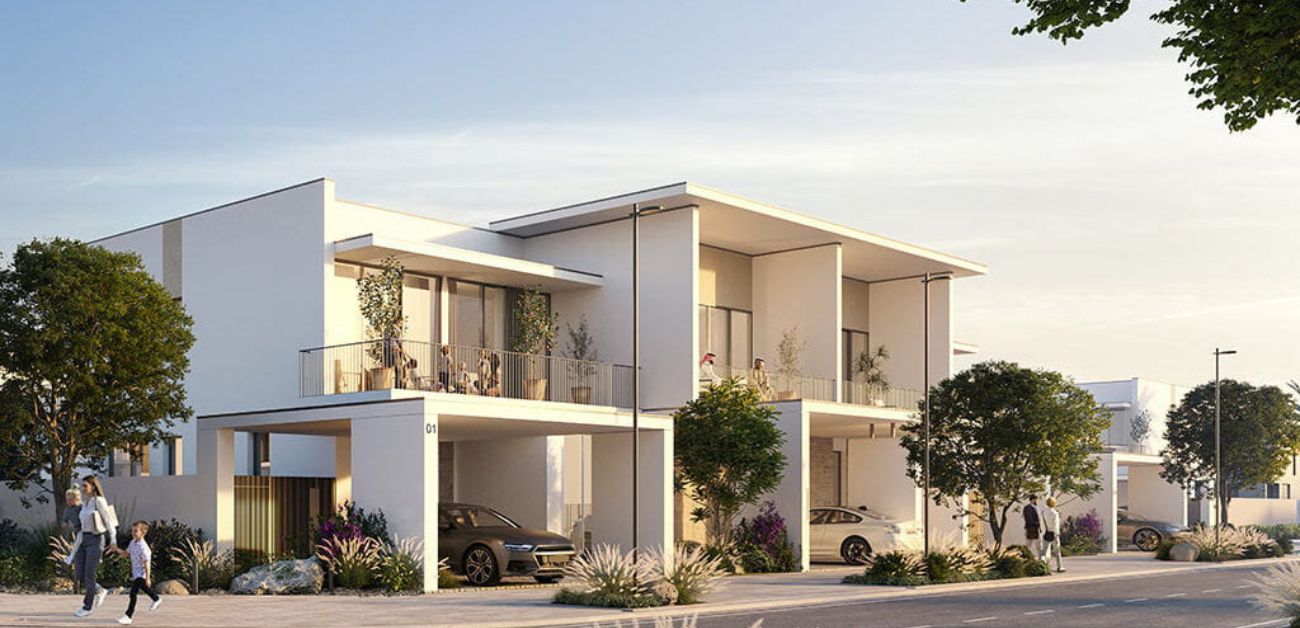
Emaar Virella at The Valley is a low-rise residential townhouse cluster planned within The Valley, a large suburban master community on the Dubai–Al Ain Road. Developed by Emaar Properties, the project reflects a broader shift in Dubai’s housing demand toward larger homes, lower density planning, and self-contained neighbourhoods outside the city core.
This article presents a data-focused and non-promotional overview covering location fundamentals, project composition, community infrastructure, and relevant market indicators.
Location and Connectivity
The Valley is situated along Dubai–Al Ain Road (E66), a key arterial route connecting Dubai to inland emirates.
Approximate drive times (off-peak):
-
Downtown Dubai: 30–35 minutes
-
Dubai International Airport (DXB): 30 minutes
-
Global Village: 20 minutes
-
Academic City / Dubai Silicon Oasis: 20–25 minutes
The area benefits from planned road expansions and phased infrastructure development, which historically has contributed to gradual land value appreciation in similar Emaar suburban projects.
Project Composition and Housing Format
Emaar Virella is expected to comprise multi-bedroom townhouses, primarily targeting end-users rather than short-stay tenants.
Indicative configuration (based on comparable Emaar Valley phases):
-
Unit types: 3 & 4 bedroom townhouses
-
Built-up area range: ~1,900 to 2,500 sq. ft.
-
Plot layouts: Back-to-back and limited corner units
-
Building height: G+1
The focus remains on functional layouts, internal storage, private outdoor areas, and community-oriented street design rather than vertical density.
Master Community Infrastructure
The Valley is planned as a self-sufficient suburban ecosystem rather than a satellite housing pocket.
Core infrastructure elements include:
-
Central parks and landscaped green corridors
-
Community retail centres (daily-need focused)
-
Schools and early-learning facilities (planned)
-
Sports courts, jogging tracks, and cycling paths
-
Dedicated children’s play zones
Unlike mixed-use urban districts, The Valley prioritizes walkability within residential clusters and vehicle-based access for inter-district travel.
Market Data and Demand Trends
Suburban Townhouse Demand
Dubai Land Department transaction data (2023–2025 trend) shows:
-
Increased absorption of townhouses in outer master communities
-
Higher owner-occupier participation compared to apartments
-
Longer average holding periods, indicating end-use intent
Communities along Al Ain Road have particularly benefited from:
-
Lower entry prices compared to Dubai Hills Estate
-
New infrastructure investment
-
Demand from families relocating from apartment-heavy zones
Rental and Yield Context
While The Valley is still in early maturity, comparable Emaar townhouse communities show:
-
Gross rental yields: ~5–6%
-
Strong leasing demand for 3–4 bedroom formats
-
Lower vacancy rates than high-rise investor-driven areas
Payment Structure and Development Phasing
As an off-plan project, Emaar Virella typically follows:
-
Construction-linked payment milestones
-
Deferred post-handover components (project-dependent)
-
Staggered handovers aligned with infrastructure readiness
Such structures are commonly used to manage buyer cash flow while supporting phased community build-out.Planning Perspective: Strengths and Constraints
Strengths
-
Low-density planning aligned with family housing demand
-
Backed by a developer with a long delivery track record
-
Positioned within a large master plan rather than a standalone plot
Constraints
-
Limited public transport access in early phases
-
Longer commute for CBD-centric professionals
-
Community amenities delivered progressively, not upfront
Conclusion
Emaar Virella at The Valley represents a data-aligned suburban housing response to Dubai’s evolving residential needs. Rather than targeting short-term returns or luxury branding, the project fits into a longer-cycle planning model focused on livability, space efficiency, and infrastructure-led value growth.
For buyers and analysts assessing Dubai’s outer master communities, Virella offers a relevant case study in how large developers are rebalancing density, affordability, and long-term urban expansion.