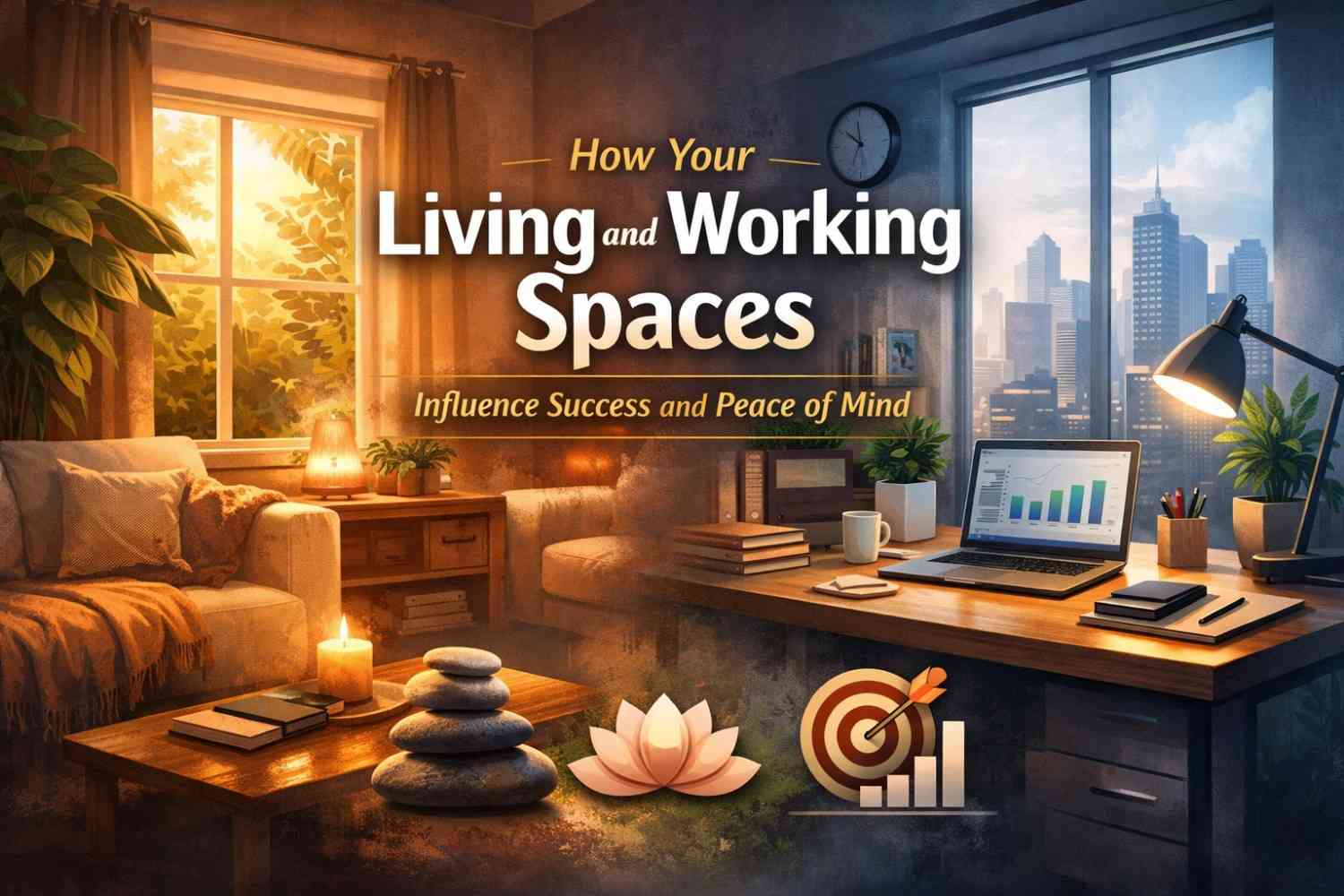
Your space affects you more than you realize. That cluttered desk isn’t just messy, it’s draining your mental energy. The dark corner of your bedroom might be why you sleep poorly. The layout of your office could actually be blocking productivity instead of helping it.
Most people treat their living and working spaces as just functional. Four walls, a roof, furniture that fits. But the environments where you spend most of your time actively shape your mental state, energy levels, and ability to succeed. Some cultures have known this forever. Practices like Feng Shui and Vastu Shastra study these connections deeply.
However you approach it, understanding how space influences you matters. Here’s what actually makes a difference.
Light Changes Everything About How You Function
Natural light isn’t just pleasant, it’s essential for your biology. It regulates sleep cycles, mood, energy, and focus. Spaces with good natural light make you feel better and work better. Dark spaces drain you even if you don’t consciously notice.
Look at where light enters your space throughout the day. Is your workspace dim when you’re trying to focus? Is your bedroom too bright in the evening when you need to wind down? These mismatches between light and activity create subtle constant stress.
You can’t always change windows, but you can change where you position furniture and where you do different activities. Work near windows during the day. Keep sleeping areas darker. Use lighting that matches what you’re trying to accomplish. Small shifts in how you use light create surprisingly big differences in how you feel.
Clutter Isn’t Just Messy, It’s Mental Noise
Every item in your visual field takes tiny bits of mental energy to process. Clutter means your brain is constantly processing stuff that doesn’t matter, leaving less capacity for what does. It’s not about being neat for aesthetics, it’s about reducing cognitive load.
Notice how you feel in a cluttered space versus a clear one. The difference isn’t imaginary. Your nervous system actually relaxes when there’s less visual chaos to process. This affects everything from stress levels to decision-making quality.
Clearing clutter isn’t just cleaning. It’s removing obstacles to mental clarity and peace. Keep surfaces mostly clear. Store things out of sight. Create visual calm in the spaces where you need to think, work, or relax. Your brain will thank you.
Flow and Movement Matter More Than You Think
How you move through a space affects your energy and mood. Cramped pathways create subtle frustration every time you navigate them. Furniture that blocks natural movement patterns makes spaces feel harder to inhabit even if you can’t articulate why.
Walk through your space and notice where movement feels awkward or blocked. Do you constantly bump into things? Squeeze past furniture? Take weird routes to get where you’re going? These friction points add up to a general feeling that the space doesn’t work.
Traditional vastu consultation considers flow and direction carefully, recognizing that how energy moves through space affects inhabitants. If you follow those principles or just use common sense about traffic patterns, the goal is the same: make movement through your space feel natural and easy.
Colors Influence Mood Whether You Notice or Not
Color psychology is real. Blues and greens tend to calm. Reds and oranges energize but can also agitate. Grays and beiges feel neutral but can become depressing in excess. The colors surrounding you daily shape your baseline emotional state.
Look at your space with fresh eyes. Does the color scheme support what you’re trying to do there? Calming colors in bedrooms help sleep. Energizing colors in workspaces boost productivity. Personal spaces benefit from colors you genuinely like instead of just what’s trendy.
You don’t need to repaint everything. Sometimes just changing accent colors through art, pillows, or small items shifts the feel significantly. Pay attention to which colors make you feel good versus drained.
Organization Systems Reduce Decision Fatigue
When everything has a place and you can find what you need without thinking, you save mental energy for things that actually matter. Disorganization means constant small decisions and frustrations that accumulate into stress.
Create systems that match how you actually use things, not idealized versions of organization. If you never hang up your coat, put a hook where you drop it instead. If papers pile on one surface, put organizational tools there rather than fighting your natural patterns.
The goal isn’t magazine-perfect organization. It’s functional systems that reduce friction and mental load in your daily life. Some people find that getting vastu consultation helps identify optimal placement for different items and activities based on directional energies.
Separation Between Work and Rest Matters
When work and personal life happen in the same physical space without boundaries, your brain struggles to switch modes. You’re never fully working or fully resting. This constant blurring creates exhaustion without accomplishment.
Create physical separation however you can. Dedicated workspace even if it’s just a specific corner. Different areas for different activities. Visual or physical markers that signal mode shifts. Your brain needs spatial cues to transition between states.
If space is limited, use curtains, room dividers, or even just consistently putting work items away when finished to create psychological separation. The clearer the boundary, the better you can engage fully with each mode.
Personal Meaning and Connection Matter
Spaces filled with things that actually mean something to you feel different than generic decorated spaces. Photos of people you love. Art you genuinely connect with. Objects with personal history. These create emotional resonance that generic decor never achieves.
Look around your space. Does it reflect you or just what you thought you should have? Do items spark positive feelings or are they just filling space? Surrounding yourself with meaningful objects creates environments that support you emotionally.
This doesn’t mean cluttering with sentimental items. It means being intentional about what occupies your space so that what’s there genuinely adds to your wellbeing instead of just existing.
Air Quality Affects Everything
Stale, poor-quality air impacts sleep, focus, mood, and health. Most people don’t think about air until there’s an obvious problem, but chronic exposure to poor air quality drains you constantly.
Open windows when possible. Add plants that clean air. Use fans to circulate. Keep spaces from getting stuffy. Consider air purifiers if needed. The invisible element of air quality dramatically affects how you feel in a space.
Some people chat with an astrologer free to understand optimal times and directions for ventilation based on personal charts. Whether you use those insights or just basic awareness of air quality, the impact on your wellbeing is significant.
Bottom Line: Your Space Is Working For You or Against You
Your living and working spaces aren’t neutral backdrops. They actively influence your success, peace of mind, energy, and wellbeing every single day. Small changes in how you arrange, organize, light, and inhabit these spaces create surprisingly large impacts.
Whether you seek vastu consultation for traditional guidance on optimal space arrangement or just apply common sense about what makes you feel good, being intentional about your environment matters. The hours you spend in these spaces add up to your entire life. Make them work for you instead of against you.
Pay attention to how different spaces make you feel. Notice what drains versus energizes you. Then make adjustments, even small ones, based on what you observe. Your environment shapes you constantly. Might as well shape it back.
Also Read: Why Timing Matters in Everyday Life