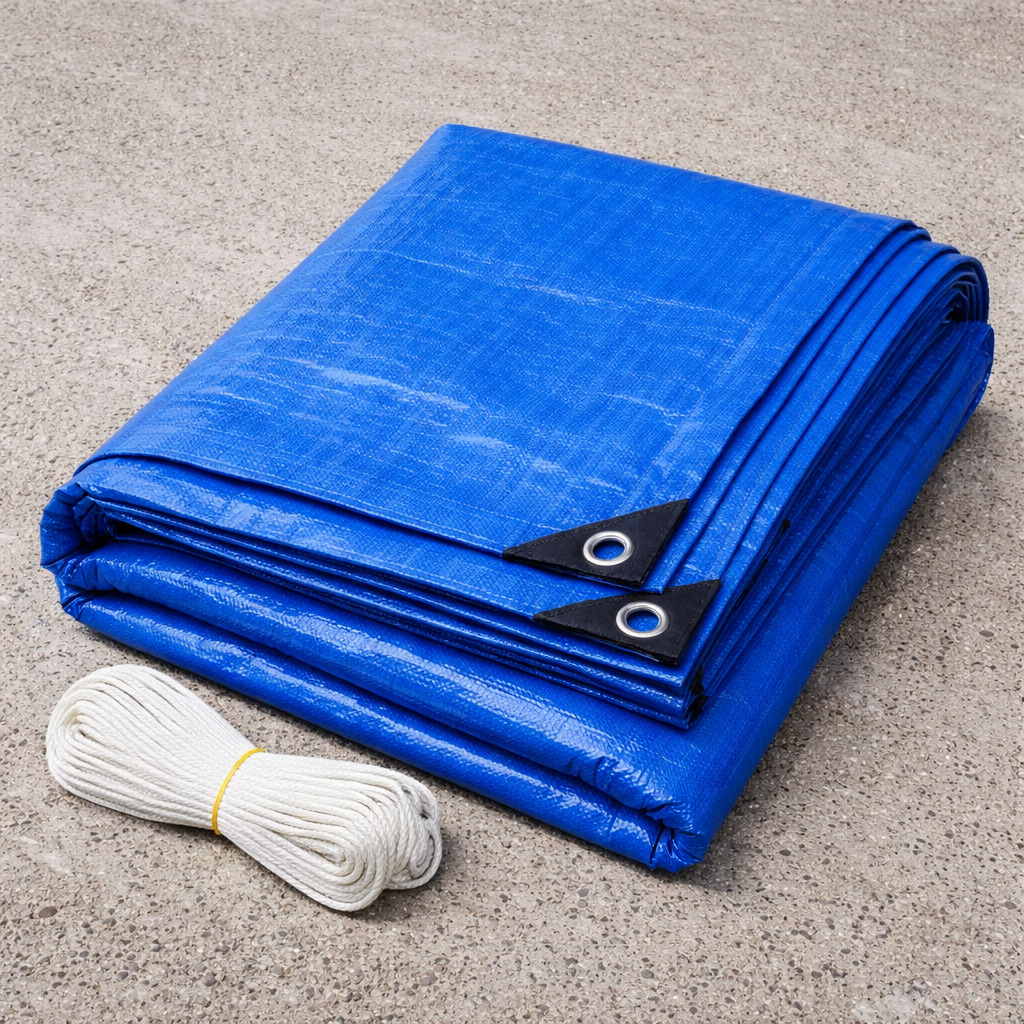
Let’s first know what we’re up against before we get into the wet specifics. Often shortened to a tarpaulin is a sizable sheet of robust, flexible, and waterproof material. Most tarps today are constructed of reinforced polyester textiles or polymers like polyethylene.
How Modern Tarpaulins Are Made
These contemporary materials are subsequently laminated or coated to provide a robust, impermeable barrier. The effectiveness of a tarp depends on this mix of a waterproof coating and a tough base fabric. Looking for real protection calls for a real Waterproof Tarpaulin, not only a water-resistant one, which we will discuss next.
Water-Resistant vs. Waterproof
Why These Terms Are Not the Same
This idea is really, really important to understand. While many people use these phrases interchangeably, in the field of outdoor protection they denote quite different things. To some extent, but not completely, a water-resistant material can prevent water from penetrating. Imagine a strong windbreaker. For a brief period, it may stand up against a little shower, but in a downpour or protracted rain the water will ultimately leak through. The cloth could be finely woven, yet it lacks sealing.
What Makes a Tarp Truly Waterproof
On the other hand, a waterproof tarpaulin blocks water completely by using a strong, consistent coating made of polyethylene laminate or a vinyl layer that forms a solid barrier.. The water is unable to pass this barrier regardless of the strength or duration of the rain. It will just collect beads and roll off the surface. Therefore, you have to make sure a tarp you intend to keep dry is marked as waterproof, not only water-resistant.
Tarpaulin for Construction and Materials
Choosing the Right Fabric Type of Tarpaulin
Not every waterproof tarp is the same quality. Three primary elements decide their capacity to keep you dry: the material, the thickness, and the reinforcements. The most often used and cheapest are polyethylene tarps. Because of their plastic construction, they are inherently waterproof and great for daily usage.
Then there are canvas tarps, which are not naturally waterproof but become so with special treatments. For particular uses, these can be more breathable, which is advantageous. Last but not least, some robust vinyl-coated polyester tarps are available. These are the kings of the tarp world. They are really strong and last a long time. You often see them on truck beds and at construction sites.
Why Thickness and Reinforcements Matter
A tarp’s thickness, measured in mils (thousandths of an inch) or grams per square meter (GSM), directly indicates its durability and lifespan. Initially waterproof, a flimsy, thin tarp could readily tear or create pinhole leaks. Much more mistreatment will a heavier, stronger tarp endure. Pay also close attention to the grommets and reinforced edges. The metal rings used to secure the tarp are called grommets, and they sit along the edges. If they are poorly attached or the edges lack a reinforced second layer, the grommets can tear out under pressure and allow rain to enter your shelter.
Does a Tarpaulin Work Better?
How Color Affects Performance
You might wonder whether a tarp’s color affects its waterproofing ability. The color has no bearing on the tarp’s waterproofing from a strictly practical perspective. In a rainstorm, a tarpaulin, a brown tarp, and a blue tarp constructed from the same substance and thickness will all behave exactly alike. The water is indifferent to the barrier’s color. Color nevertheless can be a sign of the grade of the tarp and can affect its secondary characteristics.
Choosing the Right Color of Tarpaulin
For example, when you are hunting or camping outdoors, people often select a tarpaulin because it helps them blend in with the surroundings. On the other hand, a lighter-colored tarp like silver or white is preferable if you are covering something and want to reduce heat absorption because it reflects sunshine. Depending on your needs, darker hues like black will absorb more heat, which may be either advantageous or harmful. Therefore, you choose the color depending on visibility, temperature, and visual tastes even if a Heavy Duty Tarpaulin is just as good at preventing rain.
How You Set Up Your Tarpaulin
Why Proper Angling Matters
This is the point at which several well-intentioned schemes for keeping dry fail. Although you may possess the greatest Waterproof Tarpaulin in the world, you are inviting problems if you only drape it flat over your firewood or tent. Water will ultimately collect on a flat surface. Even a little puddle of still water adds a lot of weight, which can stretch the fabric and put a lot of strain on the seams and grommets. The water will eventually find a way through either by pushing itself through a small hole or by making a seam leak.
Tarpaulin for Creating a Proper Water Runoff
Always set a tarp with a steep pitch as this is the most crucial guideline to follow in the rain. This implies your tarp needs to be inclined, similar to a house’s roof. The rain quickly flows off the slanted surface and onto the ground; it never has time to collect. This single, straightforward concept separates a dry shelter from a leaking disaster. Consider yourself as a roof architect while creating a shelter; your main priority is effective water drainage.
Common Pitfalls and How to Avoid Them
Avoiding Contact and Water Wicking
Knowing what not to do is almost as crucial as knowing what to do. Letting the tarp brush anything you want to keep dry is one frequent error. Should you be utilizing a tarp as a rainfly over a tent, it has to hang alone. If the tarp touches the tent’s inner wall, rainwater can wick through a process called capillary action and transfer the moisture directly to your tent, defeating the whole purpose. Keep a space between your gear and your tarp at all times.
Securing the Tarpaulin Against Wind
Inadequate anchoring is another stumbling block. A gust of wind can transform a badly fastened tarp into a massive, fluttering sail. This not only threatens your home falling but also stresses the material and can loosen grommets, therefore reducing its waterproof integrity. Tie all tie-out points securely using robust ropes. Make sure you tighten the ropes enough to prevent wind from catching them, but not so much that they tear the grommets. Keep in mind the direction of the wind and rain as well; angle your tarp with the sloped side facing the most common weather. Get More Best Blogs From
Real-World Scenarios
Using a Tarpaulin for Camping and Outdoor Shelter
Let’s examine how this understanding shows itself in daily life. If you’re a camper using a tarp as a shelter, you should concentrate on building a taut, A-frame or lean-to structure that effectively sheds water. Ensure the sides are low enough to block driving rain but the edges are high enough off the ground to stop splash-back.
Covering Equipment and Vehicles Correctly
Do not simply throw the tarp across the top to cover outdoor furniture or a woodpile. If at all possible, use a structure or a few poles to make a center ridge so the tarp has a peak and water flows off to the sides. To prevent a low spot for puddles to develop, weigh down the edges with bricks or logs but avoid setting them straight on the section of the tarp holding water.
Applying These Principles to Truck Covers
Using a Waterproof Tarpaulin on a truck bed still involves the same ideas. A tight cover with a small dome or ridge is much better than one that hangs down. To achieve this precise effect, many high-quality truck tarps feature built-in tensioning systems that guarantee your cargo arrives totally dry.
Conclusion
So, do tarpaulins keep you dry in the rain? Yes is the unambiguous response, but with two very important qualifiers. You have to first begin with a properly constructed, really waterproof tarpaulin fit for the circumstances you’ll encounter. While a cheap, thin tarp could be adequate for a short shower, it will let you down in a major downpour. Second, and maybe most crucially, your success is totally contingent on your configuration.