As businesses grow in the digital age, virtual platforms have become essential. They are no longer experiments; they are vital to today’s operations. By 2026, organizations across various fields are expected to utilize these platforms more frequently. They aim to boost engagement, simplify operations, and create immersive experiences. This will change how they connect with customers and employees. Virtual platforms are now essential. This includes collaborative workspaces, metaverse environments, and simulation-based training tools. They are becoming key parts of business operations.
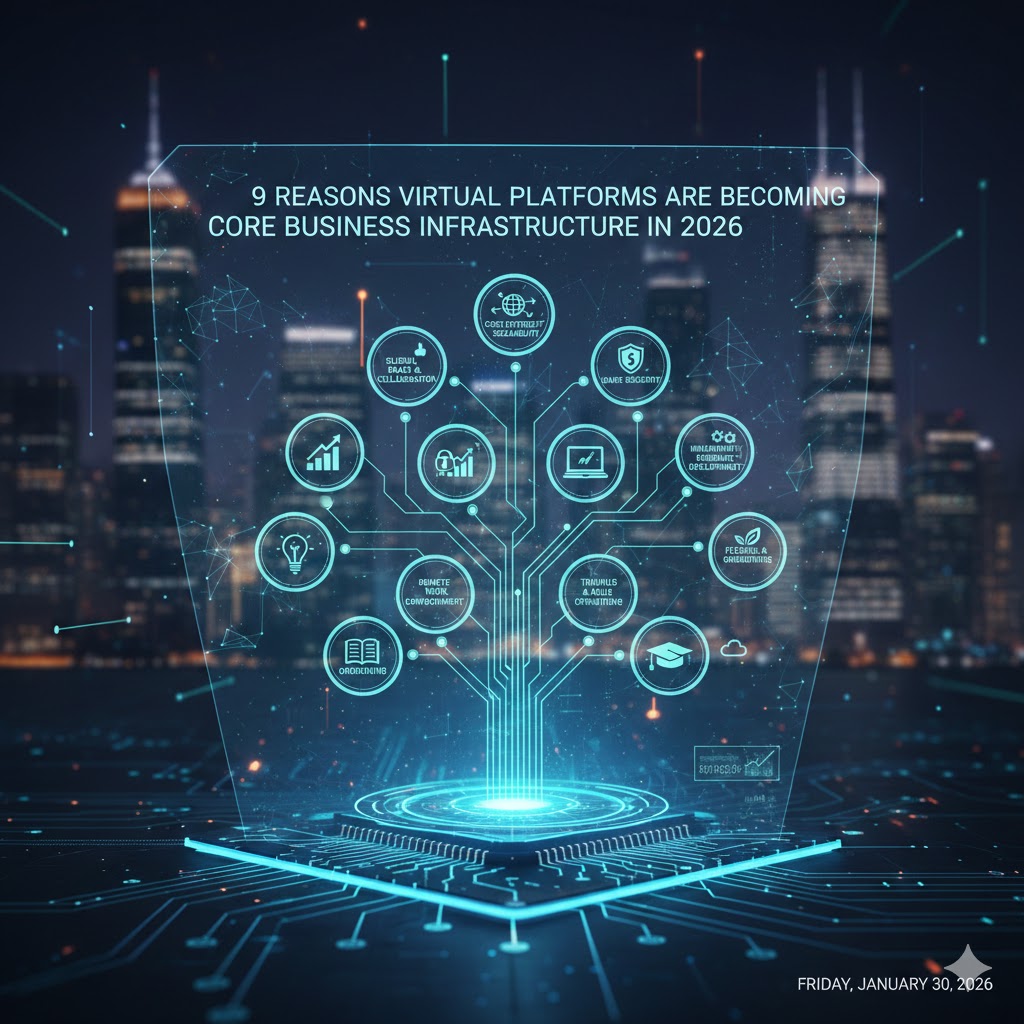
Here are 9 reasons why virtual platforms are key for businesses in 2026.
1. Enhanced Remote Collaboration and Productivity
The shift to hybrid and remote work has increased the use of virtual platforms. Traditional tools like email and video calls are no longer enough for teamwork on complex projects. Advanced virtual platforms provide immersive workspaces. Teams can collaborate in real time, visualize complex projects, and share resources easily.
By 2026, businesses will use virtual platforms more to create interactive, three-dimensional workspaces. These digital areas copy the experience of a physical office. Spatial audio, 3D models, and shared digital whiteboards boost brainstorming and project planning. They make these processes easier and more effective.
2. Cost Efficiency in Operations
Virtual platforms enable companies to achieve a large reduction in overhead costs. Organizations cut costs by holding meetings, training sessions, and product launches online. They cut costs on travel, venue rentals, and logistics.
Virtual platforms let teams test and prototype from anywhere. This helps them improve designs without needing physical materials. This capability cuts costs and lowers environmental impact. So, virtual platforms are a smart choice for businesses that want to be sustainable.
3. Global Market Reach and Customer Engagement
A key benefit of professional metaverse development solutions is connecting businesses to global audiences. By 2026, companies will hold global conferences in virtual worlds using these leading solutions. They will also leverage these spaces for trade shows and immersive brand experiences, breaking free from geographical limits.
Virtual platforms have interactive features like avatars, live chats, and virtual booths. These tools help organizations connect better with customers than traditional digital channels. This wider reach is key for companies that want to grow fast and keep personal connections.
4. Enhanced Training and Skill Development
Training and development programs are now conducted primarily through virtual platforms. This shift gives employees a more engaging and effective learning experience. Virtual platforms offer training through simulations. This lets employees practice skills without risk in safe, controlled settings.
Industries such as healthcare, manufacturing, and aviation use virtual platforms for training. This helps reduce errors in real-world operations. By 2026, these platforms should be the norm in corporate training. They will likely boost performance and retention in measurable ways.
5. Seamless Integration with Emerging Technologies
Virtual platforms now run well with technologies like AI, IoT, blockchain, and AR. This integration allows businesses to create data-driven and intelligent virtual environments.
AI-powered analytics can track user behavior in virtual spaces. This helps businesses improve layouts, engagement strategies, and how they divide resources. IoT integration links real-world data to virtual simulations. This connection helps bridge the gap between digital and physical operations.
6. Customizable and Scalable Solutions
Virtual platforms are different from traditional IT systems. They offer many customization options. They can scale to meet changing demands with efficiency. Organizations can tailor these platforms to suit their workflows, business processes, and branding.
In 2026, businesses will use virtual environments that can grow and change as needed. These platforms offer the flexibility modern businesses need. They help add team members, expand to global markets, or create virtual offices. This adaptability keeps companies competitive.
7. Improved Customer Experience and Retention
Customer expectations are soaring. Businesses must offer immersive, interactive, and personalized experiences to stay relevant. Virtual platforms let customers engage with products and services in fun ways. They offer virtual showrooms and digital product trials.
This type of engagement increases brand loyalty and retention. By 2026, companies that don’t embrace virtual experiences may fall behind. Competitors are already crafting memorable, interactive, and personalized digital journeys.
8. Data Collection and Analytical Insights
Virtual platforms create a lot of behavioral and operational data. Organizations can use this data to make better decisions. Businesses track user interactions and study workflow efficiency. This helps them find bottlenecks, preferences, and areas for improvement.
By using predictive analytics with these insights, companies can foresee customer needs. They can also improve processes and boost employee performance. This makes virtual platforms vital for data-driven decisions in 2026.
9. Future-Proofing Business Infrastructure
A key reason to use virtual platforms is that they prepare businesses for the future. As the metaverse, Web3, and AI automation grow, businesses must have flexible infrastructure. This will help them keep up with changing trends.
Virtual platforms offer a flexible base. They support innovation, experimentation, and quick launches of new digital projects. Companies using these platforms can outpace competitors. They can also meet the needs of a digital workforce and customer base.
Benefits and Impacts of Virtual Platforms in 2026
- Operational Efficiency: Streamlined processes, reduced costs, and faster project turnaround times.
- Employee Engagement: Improved collaboration, training, and morale in remote or hybrid setups.
- Market Expansion: Access to global audiences without physical barriers.
- Data-Driven Decisions: Actionable insights that optimize workflows and customer experiences.
- Brand Differentiation: Offering immersive and interactive experiences that enhance loyalty.
- Sustainability: Reduced carbon footprint through fewer physical resources and travel needs.
- Adaptability: Infrastructure capable of integrating future technologies and trends.
The impact is clear: virtual platforms are now a key asset. They drive business growth, spark innovation, and boost competitiveness in 2026.
Final Thoughts
Virtual platforms are changing how businesses work, connect, and create. These platforms provide immersive collaboration, save costs, reach globally, and offer data-driven insights. As a result, they are now essential for innovative organizations.
In 2026, companies using virtual platforms will see a big boost in their performance. They will also become leaders in a digital-first economy. The future of business is more virtual. Organizations that adapt early will have a big advantage over competitors.