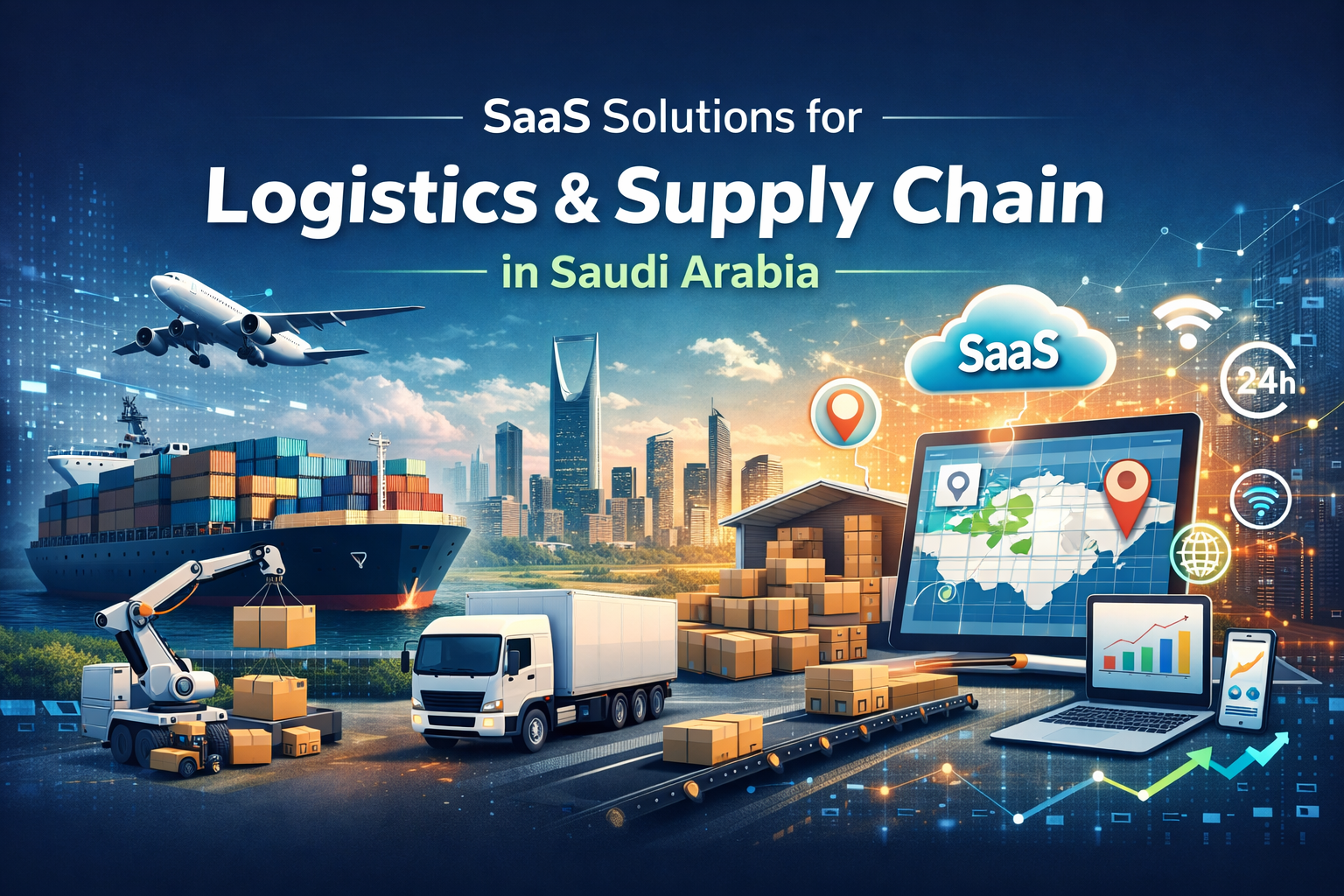
Saudi Arabia is rapidly transforming into a global logistics and supply chain hub. Backed by Vision 2030, massive infrastructure investments, smart ports, and digital trade corridors, the Kingdom is modernizing how goods move across borders, cities, and industries. At the heart of this transformation lies SaaS (Software as a Service) solutions, which are redefining logistics efficiency, visibility, and scalability.
From port operations and warehousing to fleet management and last-mile delivery, cloud-based SaaS platforms are enabling logistics companies to operate faster, smarter, and more cost-effectively. For any SAAS development company in Saudi Arabia, logistics and supply chain technology has become one of the most promising and high-growth domains.
This blog explores how SaaS solutions are reshaping logistics and supply chains in Saudi Arabia, key use cases, benefits, challenges, and future trends.
Why Logistics & Supply Chain Are Strategic Priorities in Saudi Arabia
Saudi Arabia’s geographic position connects Asia, Europe, and Africa, making it a natural logistics gateway. Vision 2030 aims to:
- Position Saudi Arabia among the top 10 global logistics hubs
- Digitize ports, customs, and freight operations
- Support e-commerce, manufacturing, and non-oil exports
- Improve supply chain resilience and transparency
To achieve these goals, logistics companies are rapidly adopting cloud-native SaaS platforms that replace fragmented legacy systems with unified, scalable solutions.
What Are SaaS Solutions in Logistics & Supply Chain?
SaaS logistics platforms are cloud-based software systems delivered via subscription models. Instead of installing software on local servers, companies access real-time logistics data through web or mobile apps.
Core Capabilities of Logistics SaaS Platforms
- Shipment tracking & visibility
- Warehouse management (WMS)
- Transportation management (TMS)
- Inventory forecasting & demand planning
- Fleet & driver management
- Customs & compliance automation
- Analytics & reporting dashboards
A modern SAAS development company in Saudi Arabia designs these platforms to integrate seamlessly with ERP systems, IoT devices, and government portals.
Key SaaS Use Cases in Saudi Logistics
1. Real-Time Shipment Tracking & Visibility
SaaS platforms provide end-to-end visibility across:
- Sea ports (Jeddah, Dammam, NEOM)
- Air cargo hubs
- Cross-border freight corridors
Businesses can track shipments in real time, receive delay alerts, and proactively manage disruptions.
2. Warehouse Management Systems (WMS)
Saudi Arabia’s growing e-commerce and retail sectors require advanced warehousing solutions.
SaaS-based WMS features include:
- Automated inventory updates
- Barcode & RFID integration
- AI-driven slotting and picking
- Multi-warehouse visibility
Cloud-based systems allow rapid scaling without heavy upfront infrastructure costs.
3. Transportation Management Systems (TMS)
A SaaS TMS helps logistics companies:
- Optimize routes using AI
- Reduce fuel and operational costs
- Manage carriers and contracts
- Track driver performance
These solutions are especially valuable for Saudi Arabia’s long-distance and cross-border transportation networks.
4. Fleet & Asset Management
With IoT and GPS integration, SaaS platforms enable:
- Vehicle tracking and maintenance alerts
- Driver behavior monitoring
- Predictive maintenance using AI
- Compliance with safety regulations
This reduces downtime and extends asset life cycles.
5. Customs, Compliance & Documentation Automation
Saudi logistics companies must comply with:
- ZATCA regulations
- Saudi Customs (FASAH) systems
- VAT and trade documentation requirements
SaaS platforms automate documentation, reduce errors, and speed up customs clearance.
Role of AI & Data Analytics in Logistics SaaS
AI is becoming a core differentiator in logistics SaaS platforms.
AI-Driven Capabilities
- Demand forecasting
- Predictive delivery timelines
- Inventory optimization
- Risk and disruption detection
- Intelligent route planning
A forward-thinking SAAS development company in Saudi Arabia builds AI-ready architectures that help logistics firms stay competitive in volatile global markets.
Benefits of SaaS for Saudi Logistics Companies
1. Scalability & Flexibility
SaaS platforms scale effortlessly as operations expand across cities, ports, or international routes.
2. Lower Operational Costs
Subscription-based pricing eliminates heavy capital investments in on-premise infrastructure.
3. Faster Time-to-Market
Cloud-based deployment enables rapid onboarding of new partners, warehouses, and services.
4. Real-Time Decision Making
Centralized dashboards provide actionable insights across the entire supply chain.
5. Improved Collaboration
Suppliers, carriers, ports, and customers operate on a single shared platform.
Why Saudi Logistics Companies Prefer Local SaaS Development Partners
Partnering with a SAAS development company in Saudi Arabia offers several strategic advantages:
- Deep understanding of local regulations (PDPL, ZATCA, NCA)
- Experience with Vision 2030 digital initiatives
- Arabic & English localization
- Integration with Saudi government systems
- On-ground support and faster compliance approvals
Local expertise significantly reduces risk and accelerates implementation.
Security, Compliance & Data Hosting in Saudi Arabia
Logistics platforms handle sensitive data, including shipment details, financial records, and government documentation.
Key Compliance Requirements
- Saudi Personal Data Protection Law (PDPL)
- National Cybersecurity Authority (NCA) guidelines
- Cloud data residency regulations
A professional SAAS development company in Saudi Arabia ensures:
- End-to-end encryption
- Role-based access control
- Secure cloud hosting (local or approved providers)
- Regular security audits
SaaS Adoption Challenges in Saudi Logistics
Legacy System Migration
Many logistics companies still rely on outdated software.
Solution: Gradual migration using modular SaaS architecture.
Change Management
Staff adoption can be slow.
Solution: User-friendly UX, training modules, and phased rollouts.
Integration Complexity
Multiple stakeholders and systems must connect.
Solution: API-first development and standardized data models.
SaaS Business Models for Logistics Platforms
Logistics SaaS solutions in Saudi Arabia commonly use:
- Per-user subscription pricing
- Per-shipment or transaction-based pricing
- Tiered plans (SME, Enterprise, Government)
- White-label SaaS for logistics providers
Choosing the right monetization strategy is critical for long-term sustainability.
Future of SaaS in Saudi Logistics (2026 and Beyond)
By 2026, logistics SaaS platforms in Saudi Arabia are expected to:
- Integrate AI agents for autonomous planning
- Support blockchain-based trade documentation
- Enable carbon tracking and sustainability reporting
- Power smart ports and NEOM logistics ecosystems
- Expand cross-GCC and global integrations
SaaS will evolve from operational tools into strategic digital infrastructure.
Final Thoughts
Saudi Arabia’s logistics and supply chain sector is undergoing a historic transformation—and SaaS solutions are at the core of this evolution. Cloud-based platforms offer the scalability, intelligence, and agility needed to support Vision 2030’s ambitious goals.
For logistics companies, investing in SaaS is no longer optional—it is essential for competitiveness and growth. Partnering with a reliable SAAS development company in Saudi Arabia ensures that platforms are secure, compliant, and future-ready.
As global trade becomes more complex, Saudi Arabia is positioning itself as a digital logistics leader—and SaaS technology is making that vision a reality.