Motorcycle riding exposes individuals to environmental hazards, road debris, weather extremes, and impact risks that are significantly higher than those faced by occupants of enclosed vehicles. While helmets remain the primary protective requirement, professional safety frameworks recognize motorcycle face masks and body armor as critical secondary protective components. These accessories enhance rider safety by reducing injury severity, improving comfort, and supporting long-duration riding performance.
This article presents an in-depth, fact-driven analysis of how Motorcycle Face Mask systems and motorcycle body armor contribute to improved riding safety. It explains their functional roles, materials, industry standards, and real-world applications using objective, expert-level insights. The content is designed for riders, safety researchers, and industry professionals seeking reliable, long-term informational value.
Understanding Motorcycle Riding Safety Systems
Motorcycle safety operates on a layered protection model. This model combines multiple protective elements—helmet, eye protection, gloves, jackets, face masks, and body armor—to reduce overall injury risk. Each layer addresses a specific vulnerability.
According to established safety principles outlined in general protective equipment references such as Wikipedia’s overview of personal protective equipment, no single item provides complete protection. Instead, risk mitigation is achieved through integrated systems working together under real-world riding conditions.
The Role of Motorcycle Face Masks in Rider Safety
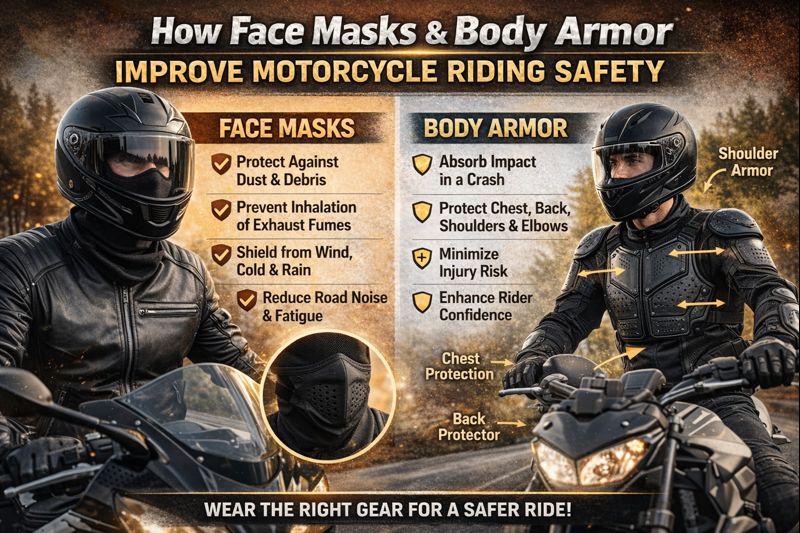
A Motorcycle Face Mask is designed to protect the rider’s face, neck, and lower head from environmental exposure and minor impact hazards. These masks are commonly used in conjunction with helmets, particularly open-face or half-helmet designs.
Protective Functions of Motorcycle Face Masks
Environmental Shielding
Motorcycle face masks reduce direct exposure to:
-
Wind chill at high speeds
-
Dust, insects, and road debris
-
UV radiation during prolonged daylight riding
Reducing exposure minimizes distraction and fatigue, both of which are recognized contributors to riding accidents.
Thermal Regulation
In cold-weather riding, face masks help retain body heat around the face and neck, reducing the risk of numbness and slowed reaction times. In warmer climates, breathable and moisture-wicking materials support evaporation and airflow.
Impact and Abrasion Reduction
While not designed for high-impact protection, face masks provide a minor abrasion barrier against flying debris or low-speed surface contact, especially around the jawline and neck.
Materials and Construction
Professional-grade motorcycle face masks are manufactured using:
-
Neoprene for wind resistance and insulation
-
Polyester blends for breathability and moisture control
-
Fleece linings for cold-weather comfort
Flatlock stitching and stretch panels are commonly used to ensure compatibility with helmet interiors without pressure points.
Motorcycle Body Armor and Impact Protection
motorcycle body armor is engineered to absorb and disperse kinetic energy during a crash or fall. It serves as the primary defense for vulnerable areas such as the spine, chest, shoulders, elbows, hips, and knees.
Core Components of Motorcycle Body Armor
Impact Absorption Systems
Modern body armor uses viscoelastic materials such as:
-
Expanded polyurethane foams
-
Thermoplastic elastomers
-
Multi-density padding systems
These materials harden on impact, dispersing energy away from bones and vital organs.
Abrasion Resistance
Armor garments often integrate high-denier fabrics or reinforced panels to reduce skin damage during slides across asphalt or gravel.
Anatomical Coverage
Professional designs follow anatomical mapping to protect:
-
Spine and tailbone
-
Thoracic and lumbar regions
-
Joints prone to impact during falls
Certification and Safety Standards
Quality motorcycle body armor aligns with recognized standards such as:
-
CE Level 1 and Level 2 impact protection ratings
-
EN 1621-1 (limb protectors)
-
EN 1621-2 (back protectors)
These standards define maximum force transmission thresholds, ensuring consistent performance during impacts.
Real-World Applications and Use Cases
Urban Commuting
Face masks protect against pollution, dust, and temperature fluctuations, while body armor mitigates risks associated with frequent stops, intersections, and low-speed collisions.
Long-Distance Touring
Extended rides expose riders to sustained wind pressure and fatigue. Face masks reduce facial strain, and body armor supports endurance by stabilizing posture and absorbing road vibration.
Off-Road and Adventure Riding
In uneven terrain, body armor becomes essential for protecting against falls and debris. Face masks help shield against mud, insects, and temperature variability.
Expert Insights and Best Practices
Industry professionals and safety trainers recommend the following practices:
-
Layer Compatibility: Ensure face masks fit seamlessly under helmets without obstructing ventilation or vision.
-
Proper Armor Placement: Armor should remain correctly positioned while riding, standing, and leaning.
-
Certification Verification: Select body armor that meets established impact standards.
-
Maintenance Awareness: Replace armor that shows compression damage; wash face masks regularly to maintain breathability.
These practices are derived from real-world accident analysis and rider safety training methodologies.
Common Mistakes and Misconceptions
Misconception 1: Face masks are only for cold weather
In reality, face masks are widely used for dust, UV, and wind protection across all seasons.
Misconception 2: Body armor replaces jackets
Body armor complements outerwear; it does not eliminate the need for abrasion-resistant jackets.
Misconception 3: Armor is uncomfortable for daily riding
Modern ergonomic designs are engineered for flexibility, airflow, and extended wear.
Misconception 4: Any padding qualifies as armor
Only certified, impact-tested materials provide reliable protection during crashes.
Frequently Asked Questions (FAQs)
1. How does a motorcycle face mask improve safety?
It reduces wind fatigue, protects against debris, and helps maintain focus by minimizing environmental distractions.
2. Is a motorcycle face mask necessary with a full-face helmet?
It is optional but beneficial for thermal regulation and added comfort during long rides.
3. What areas does motorcycle body armor protect?
It primarily protects the spine, chest, shoulders, elbows, hips, and knees.
4. Does body armor restrict movement?
Properly designed armor allows full riding mobility while maintaining impact protection.
5. How should motorcycle body armor fit?
It should fit snugly without shifting, ensuring consistent coverage during movement or impact.
6. Are CE ratings important for body armor?
Yes. CE ratings confirm the armor’s ability to limit force transmission during impacts.
7. Can body armor be worn under regular clothing?
Yes. Many riders wear armor under jackets or hoodies for discreet protection.
8. How often should motorcycle body armor be replaced?
After a significant impact or when materials show signs of degradation.
9. Are face masks safe for high-speed riding?
When properly fitted and breathable, they are safe and commonly used at highway speeds.
10. Do face masks affect helmet ventilation?
High-quality masks are designed to work with helmet airflow systems without obstruction.
Conclusion
Motorcycle riding safety depends on a comprehensive, layered protection strategy. Motorcycle Face Mask systems enhance environmental protection and rider comfort, while motorcycle body armor provides essential impact mitigation for critical body regions. When used together and selected according to professional standards, these protective elements significantly reduce injury risk and improve riding endurance. Their role within modern motorcycle safety frameworks underscores their importance for riders seeking informed, expert-approved protection solutions.