
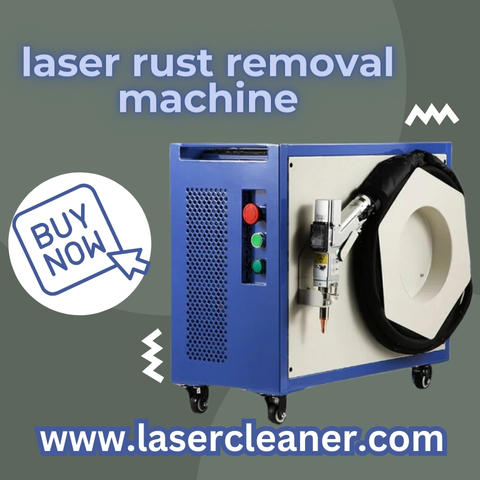
The laser rust removal machine has become a powerful solution in modern industrial surface treatment, redefining how rust, oxidation, and surface contaminants are handled across multiple sectors. As industries continue to demand cleaner, more precise, and environmentally responsible processes, laser-based rust removal has established itself as a reliable and professional approach for restoring metal surfaces without compromising material integrity.
Rust formation is a natural but damaging process that affects metals exposed to moisture, oxygen, and harsh environments. From manufacturing plants to heavy machinery maintenance, rust not only weakens structures but also affects appearance, performance, and long-term reliability. Traditional rust removal approaches often involve chemical agents, abrasive blasting, or mechanical grinding, which can be messy, inconsistent, and difficult to control. In contrast, the laser rust removal machine introduces a new level of precision and cleanliness that aligns with modern industrial standards.
At its core, laser rust removal relies on controlled laser energy interacting with rust layers on metal surfaces. The laser energy targets oxidized material while leaving the base metal largely unaffected. This controlled interaction allows operators to remove corrosion from delicate components, complex geometries, and high-value equipment where accuracy is critical. Because the process is non-contact, there is minimal physical stress applied to the surface, making it suitable for both thin and thick metal structures.
Industries such as automotive manufacturing rely heavily on surface preparation for welding, coating, and painting. A laser rust removal machine ensures that metal surfaces are properly cleaned before these processes, leading to consistent results and improved overall production quality. In restoration workshops, especially those dealing with classic vehicles or heritage machinery, laser rust removal allows technicians to preserve original materials while eliminating corrosion with remarkable control.
The shipbuilding and marine industries also face persistent challenges with rust due to constant exposure to water and salt. Laser rust removal machines are increasingly being adopted in shipyards for hull maintenance, component refurbishment, and equipment cleaning. Their ability to work efficiently on large surfaces as well as confined spaces makes them suitable for demanding marine environments where downtime must be minimized.
In the oil and gas sector, equipment reliability is non-negotiable. Pipelines, valves, and storage tanks are often exposed to corrosive conditions. A laser rust removal machine supports maintenance teams by providing a precise method to clean rusted surfaces before inspection, repair, or recoating. This enhances the accuracy of non-destructive testing and surface evaluation, ensuring that corrosion-related issues are identified clearly.
Manufacturing facilities benefit from laser rust removal not only during maintenance but also in production workflows. Metal components stored for extended periods can develop surface oxidation that affects assembly and finishing. By integrating a laser rust removal machine into the production line, manufacturers can ensure consistent surface quality without introducing additional contaminants or residues.
Another important application lies in mold and tool cleaning. Industrial molds used in casting, forging, and injection molding often accumulate rust and residues that affect product quality. Laser-based rust removal offers a controlled cleaning approach that restores mold surfaces without altering dimensions or surface textures. This level of control is particularly valuable in high-precision industries where tolerances are tight and surface conditions directly impact final output.
The aerospace industry demands extreme precision and material integrity. Components made from specialized alloys require careful handling during maintenance and refurbishment. A laser rust removal machine allows aerospace technicians to remove corrosion from sensitive parts while maintaining strict quality and safety standards. The controlled nature of laser cleaning aligns well with aerospace regulations and documentation requirements.
From an environmental perspective, laser rust removal machines align with the growing emphasis on cleaner industrial practices. Unlike chemical-based methods, laser rust removal does not rely on solvents or acids that generate hazardous waste. This makes it easier for facilities to maintain cleaner workspaces and comply with environmental regulations. The process supports a shift toward more sustainable maintenance and surface treatment practices without sacrificing performance.
Workshops and factories also appreciate the improved cleanliness associated with laser rust removal. There is no need for extensive cleanup of abrasive media or chemical residues. This results in more organized work environments and reduced preparation and post-processing efforts. Operators can focus on precision cleaning tasks rather than managing waste and secondary contamination.
The adaptability of a laser rust removal machine allows it to be used across a wide range of metal types, including steel, iron, and various alloys. Whether addressing light surface oxidation or heavier rust layers, the laser process can be adjusted to match specific cleaning requirements. This adaptability makes it suitable for both small-scale workshops and large industrial operations.
As global industries continue to modernize, the laser rust removal machine is increasingly viewed as a strategic investment rather than just a cleaning tool. It supports higher standards of quality, consistency, and professionalism in surface treatment. Companies that adopt this technology position themselves as forward-thinking and committed to advanced manufacturing and maintenance practices.
In sectors such as railways and infrastructure maintenance, laser rust removal machines are used to refurbish components like tracks, fasteners, and structural supports. Effective rust removal plays a critical role in extending service life and maintaining safety standards. The precision of laser cleaning ensures that critical components are restored without unnecessary material loss.
The role of the laser rust removal machine extends beyond rust alone. It is also commonly used to prepare surfaces for bonding, coating, and inspection. Clean metal surfaces are essential for achieving strong adhesion and accurate evaluations. Laser cleaning provides a consistent baseline that supports downstream industrial processes.
As awareness of laser-based surface treatment grows, more industries are recognizing the long-term value of adopting this technology. Training requirements are straightforward, and integration into existing workflows is achievable with minimal disruption. This ease of adoption contributes to the growing popularity of laser rust removal machines across global markets.
The continued development of laser technology has further enhanced the reliability and precision of rust removal applications. Modern laser systems are designed to operate consistently under demanding conditions, making them suitable for both indoor and outdoor use. This reliability ensures that maintenance schedules can be met without compromise.
In today’s competitive industrial landscape, maintaining high-quality equipment and surfaces is essential. The laser rust removal machine represents a modern approach to an age-old problem, combining precision, cleanliness, and adaptability. Its growing presence across industries reflects a broader shift toward smarter, cleaner, and more controlled surface treatment solutions that meet the expectations of modern manufacturing and maintenance environments.