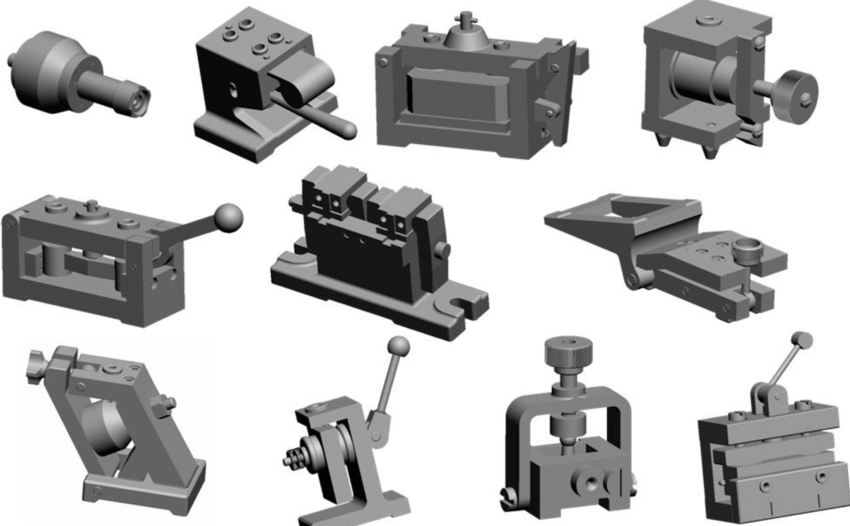
In today’s competitive CNC industry, accuracy, speed, and repeatability are critical for meeting customer expectations. Modern workshops depend heavily on jigs and fixtures tooling to maintain tight tolerances and consistent quality across complex machining operations. Without reliable tooling systems, even the most advanced CNC machines cannot deliver predictable results.
As component designs become more complex and production volumes increase, manufacturers are focusing on tooling strategies that support stability and efficiency. Well-planned Workholding tools and intelligent fixture layouts help reduce machining errors, improve surface finishes, and ensure every part matches the digital design intent.
Importance of Tooling Systems in CNC Machining
Tooling systems form the physical foundation of CNC machining. They connect the programmed instructions with the actual workpiece, ensuring accuracy throughout the process.
How Tooling Influences Dimensional Accuracy
Accurate machining depends on stable part positioning. When tooling lacks rigidity, cutting forces can cause movement that leads to dimensional variation. Proper Machining support tooling absorbs these forces and keeps the workpiece firmly in place, allowing cutting tools to perform consistently and precisely.
Impact on Production Consistency
Consistency across batches is essential for industrial manufacturing. Precision locating devices ensure that each component is positioned in exactly the same way, regardless of operator or shift changes. This repeatability simplifies quality control and reduces inspection failures.
Fundamentals of CNC Fixture Design
Effective fixtures are designed with both the machine and the part in mind. They balance strength, accessibility, and ease of use.
Structural Design Principles
A strong fixture relies on a rigid base, accurate locators, and reliable clamping mechanisms. These elements distribute machining loads evenly and prevent deformation. High-quality CNC fixture design also considers tool access to avoid unnecessary repositioning during operations.
Compatibility With CNC Machines
Fixtures must align with machine capabilities such as axis movement and spindle orientation. Horizontal and vertical machining centers require different fixture configurations. When fixtures are matched correctly, machining becomes smoother and setup times are reduced.
Role of Workholding Tools in Process Optimization
Workholding tools play a key role in improving productivity and reducing downtime. Modern solutions are designed to be both flexible and durable.
Faster Setup and Changeovers
Modular workholding systems allow operators to reconfigure setups quickly. This flexibility supports small-batch production and frequent design changes without sacrificing accuracy.
Key advantages include:
-
Reduced setup time through modular components
-
Improved alignment with preset locating features
-
Lower scrap rates due to stable clamping
Improved Operator Safety and Control
Secure workholding reduces the risk of part movement or tool damage. When fixtures are reliable, operators can focus on optimizing cutting parameters instead of making constant adjustments.
Custom Tooling Solutions for Complex Parts
Standard fixtures are not always suitable for intricate geometries or tight tolerances. Custom tooling addresses these challenges effectively.
Supporting Complex Geometries
Industries such as aerospace and medical manufacturing often require multi-axis machining and limited clamping areas. Custom solutions combine Precision locating devices with tailored supports to ensure full tool access without compromising rigidity.
Long-Term Performance Benefits
Although custom tooling may require higher initial investment, it delivers long-term value through reduced cycle times and consistent quality. Many manufacturers choose jigs and fixtures tooling solutions that are engineered for durability and scalable production.
Machining Support Tooling and Quality Assurance
Quality assurance begins before the first cut is made. Proper tooling ensures that measurement results reflect true machining performance.
Maintaining Accuracy Across Batches
When fixtures use consistent reference points, inspection data remains reliable over time. This stability supports statistical process control and continuous improvement programs.
Minimizing Rework and Waste
Accurate workholding reduces dimensional variation and surface defects. As a result, manufacturers experience lower scrap rates and improved customer satisfaction.
Quality improvements commonly achieved include:
-
Stable datum references for inspection
-
Reduced secondary machining operations
-
Consistent surface finish quality
Integration of Tooling With Automation
Automation is transforming CNC machining, and tooling systems must evolve to support it. Modern fixtures are designed with automation compatibility in mind.
Tooling for Robotic Loading Systems
Automated cells require fixtures that allow precise and repeatable part placement. Reliable clamping ensures that robotic systems can load and unload components without errors, supporting unattended machining.
Smart Fixtures and Monitoring
Advanced fixtures now include sensors that monitor clamping force and vibration. These features provide real-time feedback, helping manufacturers detect issues early and maintain consistent quality.
Future Outlook of CNC Tooling Technology
The future of CNC tooling lies in adaptability and data-driven design. Manufacturers are investing in solutions that support flexibility and digital integration.
Modular and Reconfigurable Systems
Modular fixtures allow quick adaptation to new part designs. This approach supports lean manufacturing and reduces the need for dedicated tooling for every component.
Data-Driven Tooling Decisions
By analyzing production data, manufacturers can optimize fixture performance and predict maintenance needs. This proactive approach extends tooling life and improves overall efficiency.
Conclusion
A clear understanding of tooling fundamentals helps manufacturers build reliable machining processes. For a general technical overview of the principles behind jigs and fixtures, readers can refer to Wikipedia’s reference on jigs and fixtures which explains their purpose and historical development in manufacturing.
Staying informed about modern CNC practices and machining standards is equally important. Additional insights into CNC machining concepts, applications, and industrial trends can be explored through Google’s CNC machining resources helping manufacturers make informed decisions about tooling and process optimization.