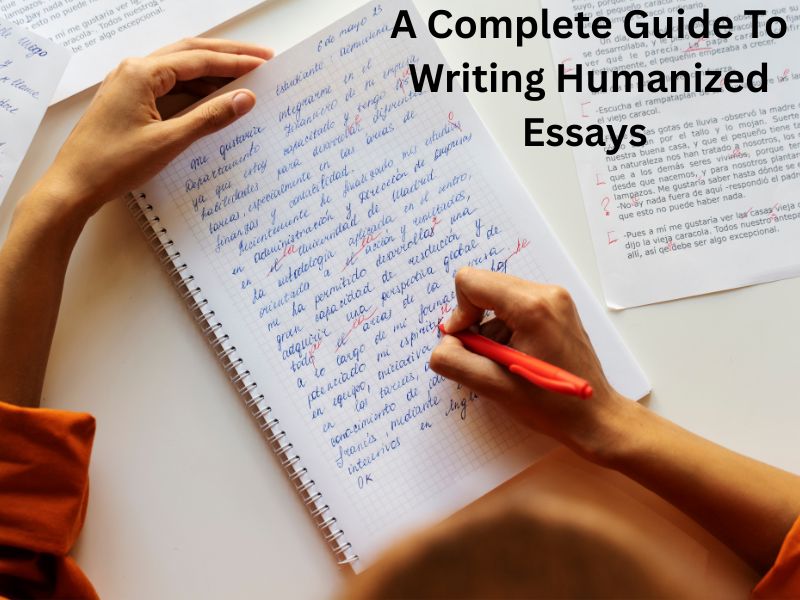
Ever wondered if your essay sounds too much like it was written by a robot? With AI tools everywhere, it is easy to end up with writing that feels polished but lifeless. The truth is, readers connect with personality, not perfection.
Like the saying goes, “it is the little things that count.” A few natural quirks, a personal touch, and your own voice can make all the difference. Essays that sound too stiff or formulaic are the ones that detectors flag most often.
So how do you keep your writing real? Would you rather read a flawless but dull essay or one that feels alive and genuine? That is the hook, and that is where the secret lies.
Finding The Human Touch
AI can help, but it can’t replace your unique voice. It is like using GPS on a road trip. The tool guides, but you still decide where to stop, what music to play, and how fast to drive. Your essay should reflect that same mix of guidance and individuality.
Readers pick up on authenticity faster than you think. A line that sounds too polished or overly formal can feel suspicious. But when you add your own stories, examples, or even a personal opinion, it suddenly feels alive. That is the kind of detail AI can’t fully mimic.
Utilize AI tools for your assignments with personalized prompts, such as “write my essay Canada“.
So, the goal is not to avoid AI completely. It is to use it wisely. Let it be your starting point, not your final draft. Because in the end, the essay that feels human will always stand out more than one that just looks perfect on paper.
Write Like You Speak
If you want your essay to sound natural, start by imagining you’re talking to someone face-to-face. When you speak, you use pauses, simple words, and your own style. That is exactly what makes writing feel human.
Avoid stiff, textbook-like sentences. Instead of saying, “The research indicates a significant correlation between the two variables,” you could write, “The study showed the two things are clearly linked.” It is still correct, but it sounds far more natural.
Remember, the goal is not to “dumb it down.” It is to maintain a conversational and relatable tone. Readers and even AI detectors can instantly distinguish between a polished robot voice and a genuine human one.
Add Your Own Stories
This is where your essay gets its soul. AI can provide data and examples, but it can’t pull from your life. That is what makes your writing truly yours. Adding a personal story, even a short one, shows your reader there is a human behind the words.
For example, when writing about teamwork, don’t just define it. Share how your group project went off track because no one checked the deadline, or how you ended up leading when no one else would. These little slices of life make your essay feel authentic.
Stories also keep readers engaged. They break up the heavy parts and add color. Instead of reading like a manual, your essay starts to read like a conversation. That is the difference between writing that blends in and writing that connects. You can also take assistance from Essay Mills.
Acknowledge & Accept Imperfections
Perfect writing is not always the most believable. In fact, a few quirks here and there can make your essay feel more alive.
Think about how people actually talk. Takes pauses, repeats themselves, or uses shorter sentences than we would in a textbook. Bringing that natural rhythm into your essay adds authenticity.
Don’t be afraid to mix it up. Throw in a question like, “Doesn’t that make you think?” or a casual phrase such as “let’s be honest.” These small touches add a personal touch to your writing. They are the kinds of details AI often misses.
You have to hand something that is flawless and real. A little imperfection shows that the words belong to you, not a machine. And that is exactly what keeps your essay safe from sounding robotic.
Students can also seek help from homework writers Canada for assignments.
Mix Structure With Flow
An essay without structure feels messy, but one that is too rigid feels robotic. The secret is balance. Think of it like music. You need rhythm, variation, and flow to keep it interesting.
AI tends to stick with evenly sized sentences and paragraphs that follow a linear progression. That is why it often feels flat. You can break that pattern. Use a short, punchy line when you want impact. Then follow with a longer, more detailed thought when you need to provide further explanation. This natural rhythm makes your essay sound human.
Don’t be afraid to blend the rules a little. Combine formal structure with casual flow. Break up long walls of text with a question or a quick comment. That mix of order and spontaneity is what makes your essay engaging and much harder to pin down as AI-generated.
Frequently Asked Questions
Q. Can I still use AI to help with my essay?
Yes, but treat it as a tool, not a crutch. Use AI for brainstorming or editing, then rewrite in your own style.
Q. What makes writing look AI-generated?
Overly polished sentences, formal tone throughout, repetitive phrasing, and lack of personal detail.
Q. How do I make my essay sound more human?
Add personal stories, vary sentence length, ask rhetorical questions, and avoid technical words.
Conclusion
At the end of the day, the key to making your essay undetectable is not tricking software, but to sound like you. AI can assist, but it can’t replace your personality, your stories, and your unique voice. When you write like you speak, add personal touches, embrace imperfections, and create a natural flow, your essay will carry authenticity that no detector can flag.
So don’t aim for robotic perfection. Aim for a real, human connection. Because the most powerful essays are not only written, but also felt.