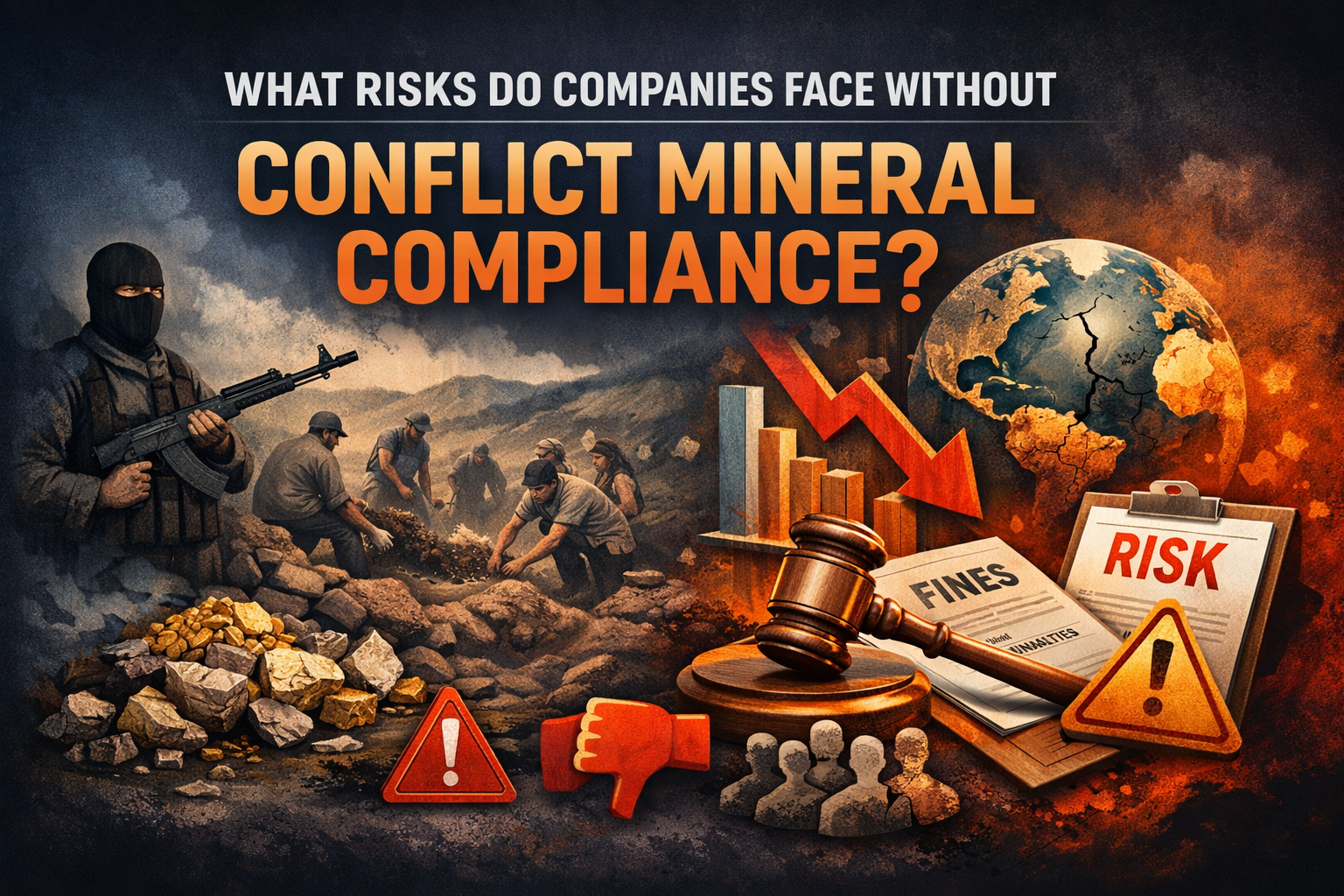
In today’s interconnected global economy, ethical sourcing and supply chain transparency have moved from optional practices to business necessities. Conflict Mineral Compliance plays a critical role in helping organisations demonstrate responsible sourcing while meeting evolving regulatory and stakeholder expectations. Companies that fail to adopt conflict mineral compliance frameworks expose themselves to a wide range of operational, financial, legal, and reputational risks that can affect long-term stability and growth. As regulations tighten and global awareness increases, the absence of a structured compliance approach can significantly weaken a company’s position in competitive markets.
Understanding these risks is essential for organisations operating across industries that rely on complex, multi-tiered supply chains. Without proactive compliance measures, even indirect involvement in unethical sourcing can result in serious consequences.
Understanding Conflict Minerals in Modern Supply Chains
Conflict minerals typically refer to raw materials sourced from regions affected by armed conflict, human rights abuses, or unethical labour practices. These materials often pass through multiple intermediaries before reaching manufacturers, making traceability challenging without a structured compliance process.
Modern supply chains are rarely linear. They span continents, involve numerous suppliers, and operate across different legal jurisdictions. Without visibility into sourcing practices, companies may unknowingly contribute to social and environmental harm. This lack of transparency becomes a major risk factor when regulatory bodies, investors, or consumers demand accountability.
Regulatory and Legal Risks
Increasing Global Compliance Expectations
One of the most immediate risks of ignoring conflict mineral obligations is non-compliance with regulatory requirements. Governments and international bodies continue to strengthen frameworks that require organisations to disclose sourcing practices and demonstrate due diligence.
Failure to comply can result in:
- Regulatory penalties
- Mandatory corrective actions
- Increased scrutiny from authorities
- Restrictions on market access
As compliance standards evolve, organisations that lag behind may struggle to adapt quickly, placing them at a disadvantage compared to more prepared competitors.
Exposure to Legal Disputes
Without documented compliance processes, companies may face legal challenges from stakeholders who believe unethical sourcing has occurred. Legal disputes can drain resources, distract leadership, and lead to long-term reputational harm. Even when unintentional, the absence of documented due diligence can weaken a company’s defence.
Reputational Damage and Brand Trust Erosion
Growing Consumer Awareness
Consumers today are more informed and socially conscious than ever before. They expect brands to operate responsibly and transparently. When companies fail to demonstrate ethical sourcing practices, trust can erode rapidly.
Negative publicity related to unethical sourcing can spread quickly through digital platforms, impacting brand perception across global markets. Rebuilding trust after reputational damage is often more costly and time-consuming than implementing compliance measures proactively.
Investor and Partner Concerns
Ethical practices are now a key factor in investment decisions. Many investors evaluate environmental, social, and governance (ESG) performance before committing capital. A lack of Conflict Mineral Compliance can raise red flags, leading to:
- Reduced investment interest
- Higher perceived risk
- Loss of strategic partnerships
Business partners may also reconsider relationships with organisations that fail to align with responsible sourcing standards.
Financial and Operational Risks
Supply Chain Disruptions
Without proper oversight, companies may unknowingly rely on suppliers that face sanctions, shutdowns, or regulatory action. This can lead to unexpected supply chain disruptions, production delays, and increased operational costs.
A single non-compliant supplier can impact an entire production network, highlighting the importance of traceability and supplier engagement.
Increased Costs Over Time
While some organisations view compliance as a cost, the absence of compliance often results in higher long-term expenses. These may include:
- Emergency supplier replacements
- Legal fees and penalties
- Crisis management costs
- Loss of revenue due to reputational harm
Proactive compliance is often more cost-effective than reactive damage control.
Ethical and Human Rights Implications
Contribution to Social Harm
Beyond business risks, the lack of conflict mineral oversight raises serious ethical concerns. Companies that fail to monitor sourcing practices may inadvertently support forced labour, unsafe working conditions, or conflict financing.
In an era where corporate responsibility is closely scrutinised, ethical lapses can undermine an organisation’s values and social licence to operate.
Misalignment with Corporate Responsibility Goals
Many organisations publicly commit to sustainability and ethical business practices. Without Conflict Mineral Compliance, these commitments risk becoming hollow statements. Inconsistency between stated values and actual practices can damage credibility with stakeholders.
ESG Performance and Sustainability Challenges
Environmental, social, and governance metrics are now central to corporate evaluations. Conflict mineral transparency directly influences social and governance scores. Organisations without clear compliance frameworks may struggle to demonstrate responsible sourcing, affecting ESG ratings and sustainability reporting outcomes.
This can limit access to sustainable finance options and weaken positioning in markets where ESG performance is a key differentiator.
Why Compliance Knowledge Matters
To fully understand the scope and importance of ethical sourcing obligations, it is essential to explore the fundamentals of compliance frameworks and their purpose. A detailed explanation of what conflict mineral compliance involves and why it is important can be found in this in-depth guide:
Competitive Disadvantages in Global Markets
Loss of Market Opportunities
Many global buyers and procurement platforms require suppliers to meet strict ethical sourcing standards. Companies unable to demonstrate compliance may be excluded from tenders or partnerships, limiting growth opportunities.
In contrast, organisations with strong compliance frameworks are often viewed as lower-risk partners and preferred suppliers.
Falling Behind Industry Standards
As conflict mineral reporting becomes standard practice across industries, non-compliant companies risk falling behind peers. This gap can widen over time, making it increasingly difficult to catch up as standards evolve.
Internal Governance and Data Risks
Lack of Supply Chain Visibility
Without structured compliance systems, organisations lack reliable data on sourcing practices. This limits decision-making, reduces operational efficiency, and increases exposure to hidden risks within the supply chain.
Weak Internal Controls
The absence of compliance often reflects broader governance gaps. Weak internal controls can extend beyond sourcing, affecting risk management, reporting accuracy, and organisational accountability.
Long-Term Strategic Risks
Reduced Business Resilience
Resilient businesses are those that anticipate risks and adapt proactively. Ignoring conflict mineral obligations leaves organisations vulnerable to sudden regulatory changes, supply chain shocks, or reputational crises.
Difficulty Scaling Operations
As businesses expand into new markets, compliance expectations often increase. Companies without established frameworks may struggle to scale responsibly, slowing growth and increasing exposure to risk.
The Case for Proactive Conflict Mineral Compliance
Adopting Conflict Mineral Compliance is not merely about meeting regulatory requirements; it is a strategic investment in long-term stability, trust, and sustainability. Proactive compliance helps organisations:
- Strengthen supply chain transparency
- Build stakeholder confidence
- Align with global ethical standards
- Improve ESG performance
- Reduce operational and reputational risks
In an environment where accountability is increasingly demanded, compliance supports both ethical responsibility and business resilience.
Conclusion
The risks companies face without Conflict Mineral Compliance extend far beyond regulatory penalties. From reputational damage and financial losses to ethical concerns and competitive disadvantages, the consequences can impact every aspect of an organisation’s operations. As global expectations continue to rise, businesses that fail to address conflict mineral risks may find themselves unprepared for the future.
By understanding these risks and prioritising responsible sourcing practices, organisations can protect their brand, strengthen supply chains, and demonstrate genuine commitment to ethical business conduct. In the long run, compliance is not just a requirement—it is a foundation for sustainable growth and trust in a rapidly evolving global marketplace.