The hair extension industry in the United States has evolved far beyond simple length enhancement. Today’s consumers are educated, style-driven, and quality-focused. Whether you’re a first-time buyer, a stylist, or a beauty entrepreneur, understanding the differences between hair extension wefts, frontals, and closures is essential. Each serves a unique purpose, and choosing the right one can completely transform both the look and longevity of a hairstyle.
After two decades in the hair industry, one thing is clear: most dissatisfaction doesn’t come from poor hair quality—it comes from choosing the wrong construction for the desired style. Let’s break everything down in a practical, no-fluff way.
What Are Hair Extension Wefts?
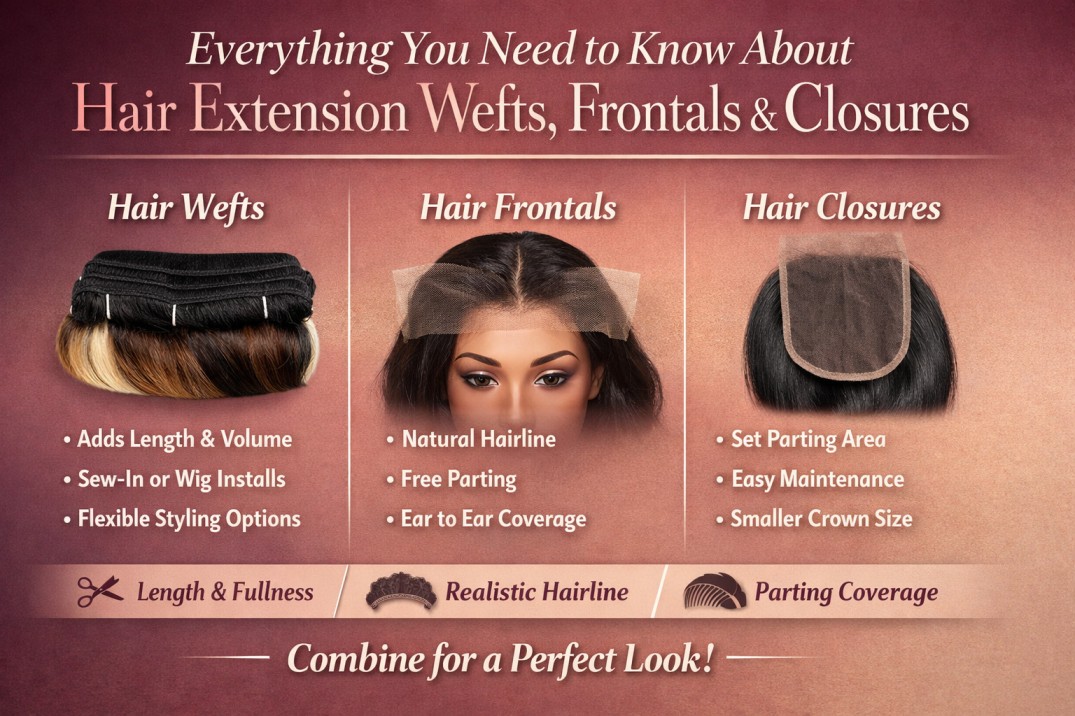
Hair wefts are the foundation of most sew-in and weave hairstyles. A weft is created by sewing or bonding strands of hair together at the top to form a long strip. This strip is then installed onto braided natural hair or sewn onto a wig cap.
Types of Hair Wefts
In the U.S. market, you’ll typically encounter:
-
Machine Wefts – Thick, durable, and cost-effective. Ideal for fuller sew-ins.
-
Double Wefts – Two wefts stitched together for extra density and volume.
-
Hand-Tied Wefts – Thinner and more flexible, offering a flatter, more natural look.
-
Flat or Genius Wefts – A newer innovation combining durability with minimal bulk.
Why Wefts Are So Popular
Wefts are the go-to choice because they:
-
Add length and volume efficiently
-
Work well for protective styling
-
Are suitable for both wigs and traditional sew-ins
-
Offer flexibility in styling (straight, curly, wavy)
For U.S. consumers who prioritize value and versatility, hair wefts remain the backbone of the extension world.
What Is a Hair Frontal?
A hair frontal is a lace-based hairpiece that runs ear to ear across the front hairline. It typically measures 13×4 or 13×6 inches and is designed to replicate a natural hairline.
The Purpose of a Frontal
Unlike wefts, frontals:
-
Create a realistic hairline
-
Allow free parting across the front
-
Eliminate the need to leave out natural hair
This makes them especially popular among clients who want a flawless, salon-quality finish without heat damage or blending issues.
Lace Frontal Benefits
-
Natural-looking edges
-
Multiple parting options
-
Ideal for high ponytails, middle parts, and side parts
-
Protective for natural hair
In the U.S., lace frontals are a staple for women who want Instagram-ready styles with maximum realism.
What Is a Hair Closure?
A hair closure is similar to a frontal but smaller. It typically comes in sizes like 4×4, 5×5, or 6×6 inches and covers only the crown or parting area.
Closures vs Frontals: The Key Difference
-
Closures provide a set parting space
-
Frontals allow full hairline styling freedom
Closures are often preferred by:
-
Beginners
-
Clients seeking low maintenance
-
Those who want longer install longevity
Why Closures Are Still in Demand
Closures offer:
-
Easier installation
-
Less tension on edges
-
A more affordable option than frontals
-
Consistent, neat parting
For many U.S. clients, closures strike the perfect balance between realism, cost, and simplicity.
How Wefts, Frontals & Closures Work Together
A complete weave or wig installation often combines all three components:
-
Wefts for length and fullness
-
Frontals or closures for scalp realism and parting
This combination ensures:
-
Natural appearance
-
Scalp coverage
-
Styling versatility
Understanding how these pieces work together helps buyers make smarter purchasing decisions—and avoid overspending on unnecessary hair.
Choosing the Right Option for Your Lifestyle
Choose Wefts If:
-
You want maximum volume
-
You plan to do sew-ins or custom wigs
-
You prefer long-lasting installs
Choose a Closure If:
-
You want low maintenance
-
You prefer a fixed part
-
You’re new to hair extensions
Choose a Frontal If:
-
You want a natural hairline
-
You love switching part styles
-
You wear ponytails or pulled-back looks
In the U.S. market, lifestyle matters just as much as aesthetics. Busy professionals often lean toward closures, while trend-forward clients gravitate toward frontals.
Hair Quality Matters More Than Construction
No matter which option you choose, hair quality is non-negotiable. Look for:
-
100% human hair
-
Intact cuticles
-
Minimal processing
-
Consistent density from root to tip
High-quality hair lasts longer, styles better, and saves money over time.
Maintenance Tips for Longer Lifespan
-
Use sulfate-free shampoos
-
Avoid excessive heat
-
Store wigs properly when not in use
-
Moisturize lace to prevent dryness
-
Reinstall professionally when possible
Proper care can extend the life of wefts, frontals, and closures from months to over a year.
Final Thoughts
Hair extension wefts, frontals, and closures each serve a distinct role in achieving beautiful, natural-looking hairstyles. The key is understanding what each piece does and how it fits your personal style, budget, and routine.
In the United States, where beauty trends shift quickly and quality expectations are high, informed choices set great hair apart from average installs. When you invest wisely and maintain properly, hair extensions aren’t just an accessory—they’re a confidence upgrade.