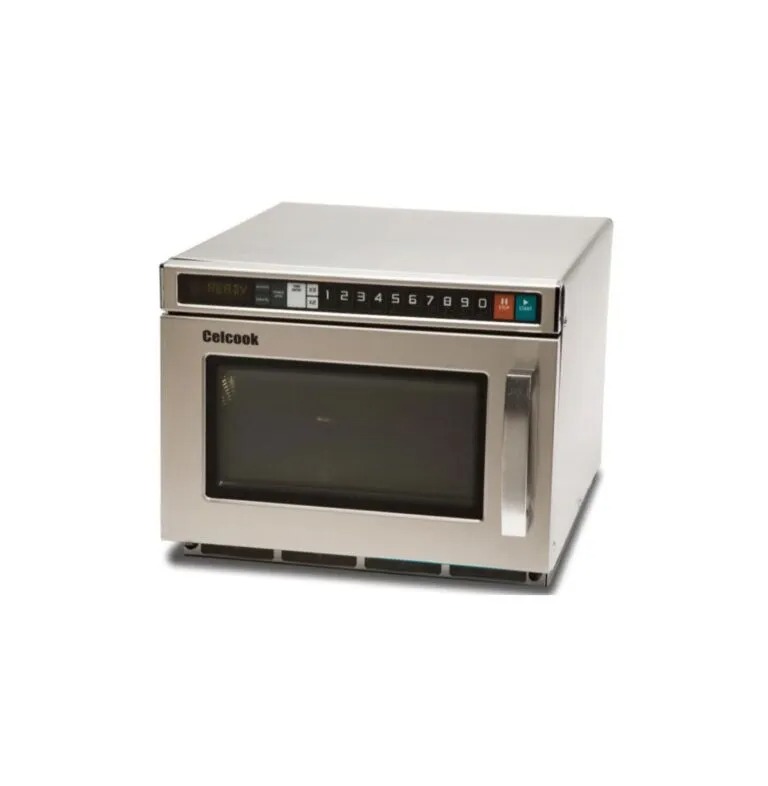
In the fast-paced world of the food service industry, every second counts. Whether you are running a high-traffic café, a busy breakroom, or a specialized catering service, the tools you choose dictate the rhythm of your kitchen. Among the most essential yet often overlooked workhorses is the 1200 watt commercial microwave. While residential units might suffice for occasional home use, a professional environment demands a machine that can withstand constant operation while delivering consistent results.
This guide explores why the 1200-watt power bracket is considered the “sweet spot” for many businesses and how choosing the right compact unit can revolutionize your daily operations.
Why 1200 Watts is the Industry Standard for Efficiency
When selecting a microwave, wattage is the primary indicator of cooking speed and heat distribution. A lower-wattage unit (under 1000W) often struggles to heat dense foods evenly, leading to cold spots and longer wait times. Conversely, extremely high-wattage units (over 1800W) might be overkill for smaller tasks or delicate items.
The 1200-watt range provides the perfect balance. It offers enough punch to defrost, reheat, and steam foods rapidly without the massive footprint or high electrical requirements of heavy-duty industrial ovens. For many operators, the 1200 watt commercial microwave represents a versatile investment that handles everything from melting butter to heating complete entrees in a fraction of the time.
Commercial vs. Residential: The Durability Gap
It is a common temptation for new business owners to purchase a cheap microwave from a big-box retail store. However, the internal components of a residential microwave are not designed for the heat and frequency of a commercial kitchen. A home unit might be used three or four times a day; a commercial unit might be used thirty or forty times an hour.
Commercial-grade machines feature heavy-duty cooling fans, reinforced door hinges, and high-quality magnetrons designed for “high-frequency” usage. Furthermore, commercial units usually lack the rotating glass turntables found in home models. Instead, they use a motorized stirrer antenna at the top or bottom to distribute waves. This eliminates a common breakage point and makes the interior much easier to sanitize—a critical factor for health inspections.
Maximizing Space with Compact Design
Kitchen real estate is expensive. Every square inch of counter space must earn its keep. This is where “compact” commercial models shine. A compact 1200-watt microwave allows you to stack units or tuck them into tight prep stations without sacrificing the power needed for professional results.
Despite their smaller exterior dimensions, these units are often designed to hold standard half-size pans or large dinner plates. This design philosophy ensures that even a small sandwich shop or a convenience store can provide hot, high-quality food to customers without needing a massive kitchen renovation.
Precision Control and Programmability
In a professional kitchen, consistency is the key to customer satisfaction. If a breakfast burrito takes 45 seconds to heat perfectly, it should take 45 seconds every single time, regardless of which staff member is operating the machine.
Professional 1200-watt microwaves typically feature programmable touchpads. This allows managers to “set and forget” specific cook times and power levels for their most popular menu items. Instead of guessing, an employee simply presses “Button 1” for a muffin or “Button 2” for a soup bowl. This reduces food waste, prevents overcooking, and speeds up service during peak rush hours.
Ease of Cleaning and Food Safety
Food safety is the foundation of any successful food service operation. Commercial microwaves are built with stainless steel interiors and exteriors for a reason. Stainless steel is non-porous, meaning it does not harbor bacteria, and it resists the acidic nature of many foods and cleaning chemicals.
Many high-quality 1200-watt units also feature removable air filters. These filters protect the internal components from grease and dust, which are prevalent in kitchen environments. Regular cleaning of these filters ensures the machine runs at peak efficiency and extends its lifespan significantly, providing a better return on investment over several years.
The Financial Impact: Speed Equals Turnover
In the hospitality industry, time is literally money. If a 1200-watt microwave can heat a dish 20% faster than a 1000-watt unit, that time adds up over weeks and months. Faster heating leads to shorter lines, happier customers, and higher table turnover.
Furthermore, because commercial units are built to last, you avoid the “replace every year” cycle associated with using domestic appliances in a business setting. When you calculate the cost of downtime—when a cheap microwave breaks in the middle of a lunch rush—the value of a dedicated commercial unit becomes undeniable.
Selecting the Right Partner for Your Equipment
Choosing the right equipment is only half the battle; choosing the right distributor is the other half. In Canada, having a partner that understands local electrical standards and provides robust after-sales support is vital. You want to ensure that if you ever need a spare part or technical advice, you aren’t waiting weeks for an international shipment.
Reliable distributors offer curated selections of brands that have been “battle-tested” in the field. They provide the peace of mind that the 1200-watt microwave you buy today will still be performing at its peak two or three years from now.
Conclusion: Investing in Your Kitchen’s Future
Whether you are upgrading an existing facility or building a new kitchen from scratch, the microwave is a foundational tool. By opting for a 1200-watt commercial-grade unit, you are prioritizing speed, durability, and consistency.
Don’t settle for underpowered equipment that slows your team down. Invest in a machine designed for the rigors of the industry, and you will see the results in your efficiency, your food quality, and ultimately, your bottom line.