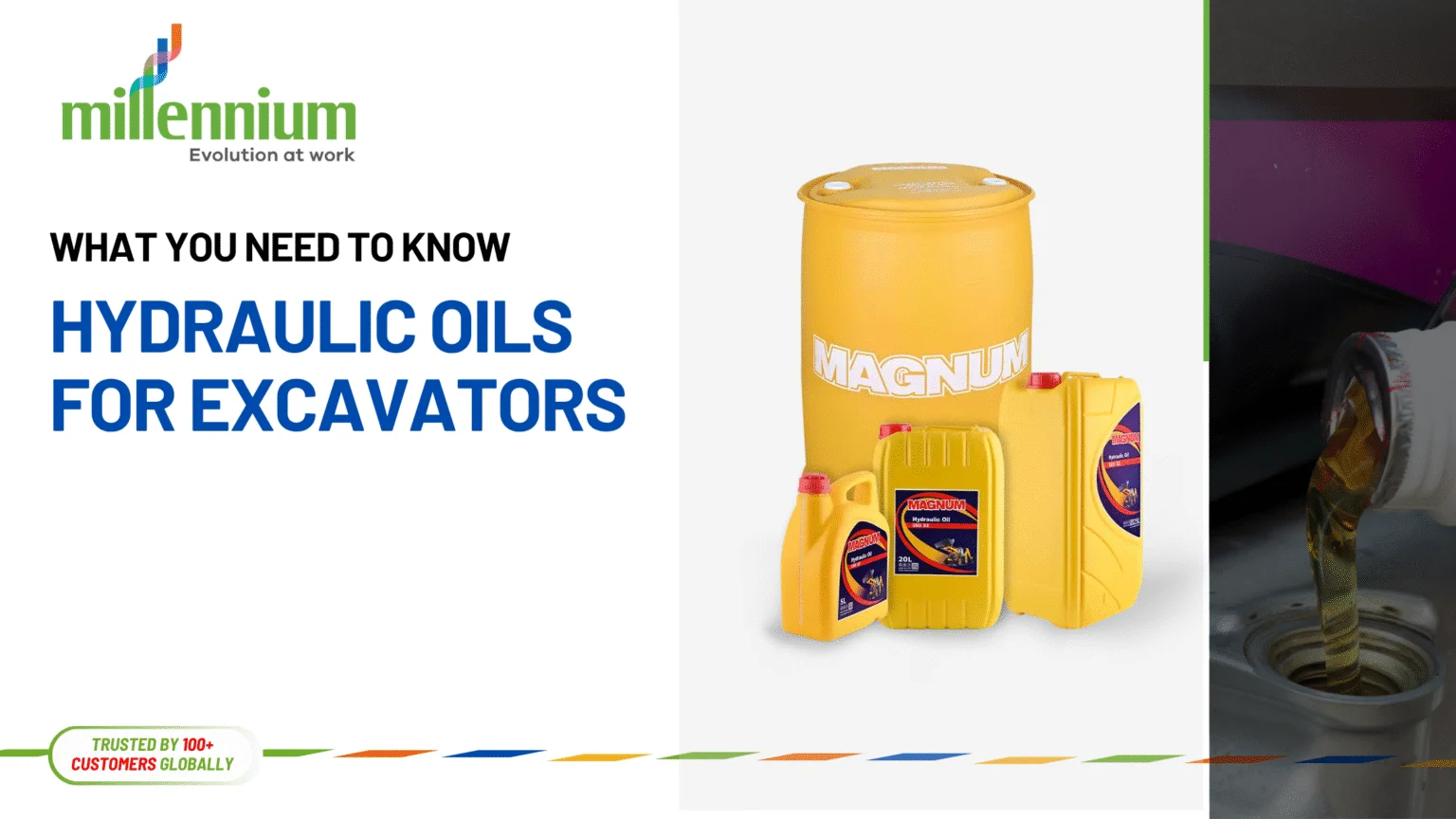
Excavators are built to perform tough tasks—digging, lifting, breaking, and moving heavy materials for long hours in challenging environments. At the core of every excavator’s performance is its hydraulic system. While pumps, valves, hoses, and cylinders are highly engineered components, their efficiency and durability depend heavily on one critical element: hydraulic oil. Selecting the right hydraulic oil is essential for smooth operation, precise control, and long-term equipment reliability.
This guide explains why hydraulic oils matter, how viscosity impacts excavator performance, why ISO 46 and ISO 68 are widely preferred, and how MAGNUM Hydraulic Fluids support demanding applications.
Role of Hydraulic Fluids
Hydraulic oil is not just a lubricant—it is a functional fluid that enables excavators to operate. Its primary role is to transmit power from the engine-driven pump to hydraulic actuators. Any loss in fluid quality directly affects digging force, lifting capacity, and responsiveness.
Another key function of hydraulic oil is component protection. Internal parts such as pumps, spools, pistons, and motors operate with tight tolerances. Hydraulic oil forms a protective film that reduces friction, limits metal-to-metal contact, and prevents premature wear.
Heat management is another critical role. Excavators generate substantial heat during operation, especially under heavy loads or continuous use. Hydraulic oil absorbs this heat and transfers it to coolers, preventing overheating and maintaining system stability.
Hydraulic fluids also help maintain system cleanliness. High-quality oils contain additives that control oxidation, neutralize acids, and keep contaminants suspended until filters remove them. In dusty construction sites or humid outdoor environments, this contamination control is vital to avoid valve sticking and seal damage.
Without the right hydraulic oil, excavators can suffer from power loss, erratic movements, excessive heat buildup, and costly breakdowns.
Choosing the Correct Viscosity Ratings
Viscosity is the most important characteristic to consider when selecting hydraulic oil. It determines how easily the oil flows and how effectively it maintains a lubricating film under pressure.
If viscosity is too low, the oil may leak internally within pumps and valves, reducing efficiency and causing increased wear. If viscosity is too high, the oil may flow slowly, leading to poor response, higher energy consumption, and difficulty during cold starts.
When choosing viscosity for excavators, consider:
Average and peak ambient temperatures
Hydraulic system operating temperature
Load intensity and work cycles
OEM-recommended viscosity ranges
Proper viscosity ensures stable pressure, efficient energy transfer, smooth control, and reduced stress on hydraulic components. Selecting the wrong grade may not cause immediate failure but will gradually shorten system life.
Why Are ISO 46 and ISO 68 Most Suitable?
ISO viscosity grades are standardized to help users select the correct oil based on operating conditions. Among these, ISO 46 and ISO 68 are the most commonly recommended for excavators worldwide.
ISO 46 Hydraulic Oil
ISO 46 offers excellent flow characteristics for machines operating in moderate climates. It allows quick system response, efficient pump performance, and reliable lubrication during normal working temperatures. This grade is well suited for excavators that operate with frequent starts, stops, and variable workloads.
Typical applications include:
General construction excavators
Urban infrastructure projects
Equipment working across mixed duty cycles
ISO 68 Hydraulic Oil
ISO 68 is designed for higher operating temperatures and heavier loads. Its increased viscosity provides a stronger lubricating film, making it ideal for excavators operating continuously, carrying heavy loads, or working in hot environments.
ISO 68 is preferred for:
Mining and quarrying excavators
Large earthmoving equipment
Machines exposed to high ambient heat
Both ISO 46 and ISO 68 provide the right balance between protection and efficiency when selected according to climate and workload, rather than machine size alone.
MAGNUM Product Fit: Attributes and Advantages of MAGNUM Hydraulic Fluids
MAGNUM Hydraulic Fluids are engineered to meet the real-world demands of excavator operations. Formulated with premium base oils and advanced additive systems, MAGNUM products are designed to deliver reliable performance under varying loads and temperatures.
Key Attributes
Strong anti-wear protection for pumps and valves
High viscosity index for consistent performance across temperature changes
Excellent oxidation resistance to prevent sludge and varnish formation
Effective rust and corrosion protection in harsh environments
Good water separation properties to maintain oil integrity
Advantages for Excavator Users
MAGNUM Hydraulic Fluids help maintain smooth hydraulic response, reduce internal leakage, and improve overall system efficiency. Their stability under heat and pressure supports longer oil life, minimizing downtime and maintenance costs. By protecting critical components, MAGNUM fluids contribute to extended equipment service life and dependable operation.
Available in ISO 46 and ISO 68 grades, MAGNUM Hydraulic Oils are suitable for both standard construction work and heavy-duty excavation applications.
Conclusion
Hydraulic oil selection plays a crucial role in excavator performance, reliability, and operating cost control. Understanding the function of hydraulic fluids, choosing the correct viscosity, and using proven grades like ISO 46 hydraulic oil and ISO 68 hydraulic oil ensures efficient power transmission and long-lasting hydraulic systems.
With high-quality solutions such as MAGNUM Hydraulic Fluids, excavator operators can protect their equipment, reduce maintenance issues, and achieve consistent performance even in demanding working conditions.