“This article explains how pickleball scheduling tools simplify tournament and league management by improving organization, reducing conflicts, optimizing court use, and creating fair and enjoyable experiences for players and organizers.”
Pickleball continues to grow at a fast pace. Recreational play has expanded into organized tournaments and structured leagues across many communities. As participation increases, organizers face greater responsibility. Coordinating players, courts, and match times now requires more than simple planning. This is where pickleball scheduling becomes essential for smooth and fair event management.
Common Challenges in Tournament and League Organization
Organizing pickleball events manually often leads to confusion. Paper schedules and basic spreadsheets can create overlapping match times and missed updates. When courts are shared, double bookings become common.
Player availability adds another challenge. Last minute cancellations or late registrations disrupt entire schedules. Organizers also carry a heavy administrative load, answering questions and updating players repeatedly. These issues affect event quality and player satisfaction.
What Pickleball Scheduling Tools Are
Digital pickleball scheduling systems organize matches, leagues, and tournaments. These tools track court usage, match formats, and player availability, unlike calendars.
Automation reduces human error. Once information is entered, schedules adjust smoothly when changes occur. This structure allows organizers to focus on the overall experience instead of constant coordination.
Core Features of Pickleball Scheduling Tools
Centralized Scheduling System
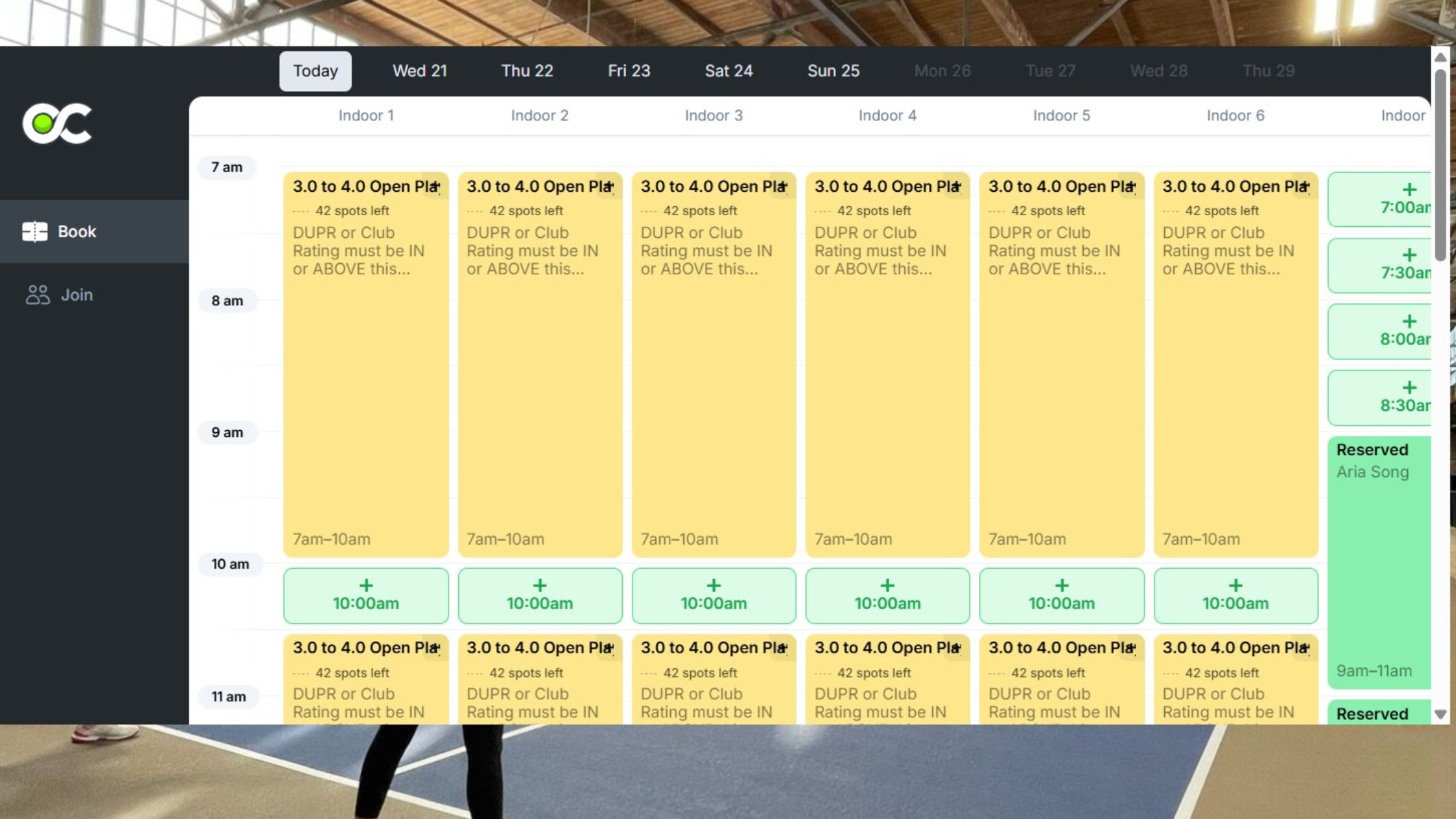
A single dashboard shows courts, matches, players, and time slots together. Updates appear instantly for everyone involved. This prevents confusion and miscommunication.
Match Creation and Format Support
Scheduling tools support round robin, ladder, and elimination formats. Matches are distributed evenly so players receive fair opportunities without manual calculation.
Player Registration and Availability Management
Players can register online and share preferred play times. Skill levels and divisions are easier to organize. Conflicts are reduced because availability is tracked in advance.
Real Time Updates and Notifications
When changes occur, players receive immediate alerts. This keeps everyone informed and avoids unnecessary waiting or missed matches.
Managing Pickleball Tournaments With Scheduling Tools
Tournament planning becomes more efficient with digital scheduling. Organizers can set match sequences ahead of time while allowing flexibility as results come in.
Court and time slot allocation is one of the biggest advantages. Coordination is needed in high-demand areas like Los Angeles. Inside pickleball Los Angeles facilities may have limited hours, while outside courts rely on weather and daylight.
Tournament scheduling must also consider match timing, player flow, and respite between games. Well-structured timelines avoid tiredness and manage events smoothly. This guide on scheduling pickleball tournaments provides practical direction for organizers planning timetables, player movement, and rest periods.
League Management Made Simpler
Leagues require consistency over weeks or months. Scheduling tools help plan recurring matches without overlap. Players know their match days and times well in advance, creating reliable routines.
Fair player rotation becomes easier. Tools ensure balanced matchups and equal court time. Substitutes can be added without disrupting the entire season schedule.
Standings and performance tracking update automatically. Wins, losses, and points remain visible to all participants. This transparency builds trust and motivation within the league.
Benefits for Organizers and Players

For organizers, scheduling tools reduce manual work. Time spent answering messages and fixing errors decreases. Event management feels more controlled and professional.
For players, clarity improves the overall experience. Clear schedules reduce uncertainty. Less frustration comes from fewer final modifications. Players feel valued and are more inclined to come back for future events.
Scheduling Tools in High Demand Pickleball Areas
In areas with strong pickleball growth, court availability becomes competitive. Pickleball Los Angeles reflects this challenge clearly. More people want to play indoor pickleball in Los Angeles on weekends and evenings. During busy times, outdoor pickleball courts fill up quickly.
Scheduling tools balance demand. Courts are used more efficiently and time slots are fair. Without stress or uncertainty, organizers may host more events.
Choosing the Right Pickleball Scheduling Tool
The right tool should be easy to use. Organizers with limited technical skills should still feel confident managing schedules. Scalability matters for both small leagues and large tournaments.
Mobile access allows updates from anywhere. Reliable performance ensures schedules remain accessible during events. Data protection is also important, as player information must stay secure.
Best Practices for Successful Scheduling
Clear rules should be set before scheduling begins. Registration deadlines and cancellation policies help maintain order. Player information must stay updated to avoid conflicts.
Schedules should be presented early and clearly. Post-event schedule reviews assist improve future tournaments and leagues.
The Future of Pickleball Scheduling
Digital scheduling continues to shape organized sports. Pickleball is no exception. Integration with registrations, payments, and court bookings will become more common.
As participation grows, structured scheduling will support long term development. Technology helps communities manage growth while keeping the sport accessible and enjoyable.
Conclusion
Pickleball scheduling tools are very important for running tournaments and leagues well. They help people play fair, make fewer mistakes, and talk to each other better.
Organized systems make things better for both participants and organizers. As pickleball grows, structured scheduling will continue to be an important part of running successful events.