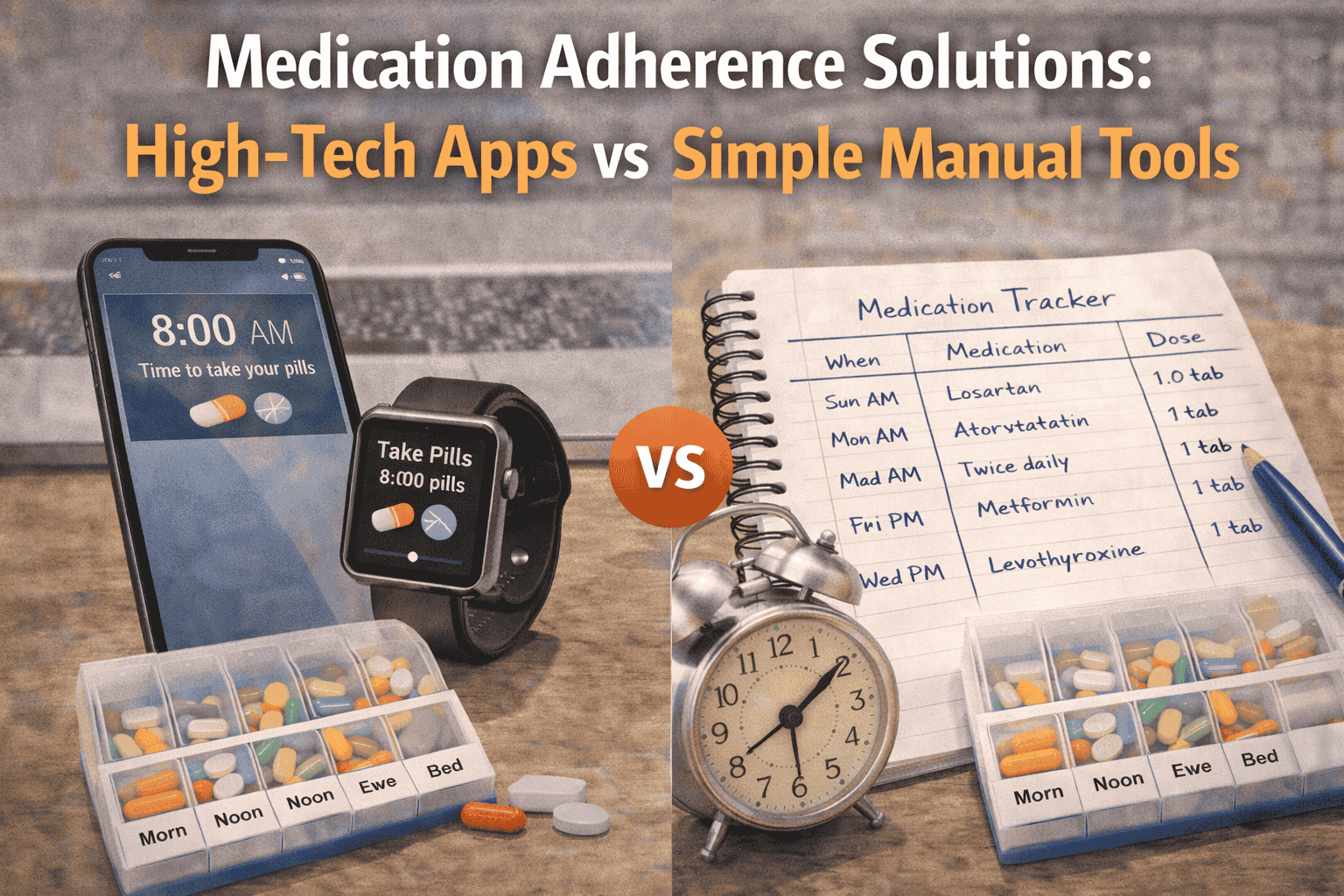
Medication adherence remains one of the most persistent challenges in modern healthcare. Despite clear prescriptions and well-defined dosing schedules, many patients struggle to take medications at the right time, in the right amount, and consistently over long periods. This challenge has led to a wide range of adherence solutions—from smartphone apps and digital reminders to physical tools designed to simplify daily routines.
The debate is no longer about whether medication support tools are needed, but which type works best in real-world conditions.
The Rise of High-Tech Medication Adherence Apps
High-tech adherence tools typically come in the form of mobile apps, smart pill dispensers, or connected devices that sync with phones or cloud platforms. These solutions often include features such as alarms, push notifications, dosing logs, refill reminders, and data sharing with caregivers or healthcare providers.
In theory, these tools offer robust functionality. For tech-savvy users who keep their phones nearby, apps can provide timely alerts and long-term adherence data. Some patients appreciate being able to visualize their medication history or integrate reminders into broader digital health routines.
However, real-world usage reveals some limitations. Alerts can be dismissed accidentally. Phones may be silenced, misplaced, or forgotten. Battery life, updates, and usability issues also introduce friction—particularly for older adults. Over time, notification fatigue often reduces effectiveness, with reminders blending into the background noise of everyday digital life.
Why Simplicity Matters in Medication Routines
Medication adherence is not only a clinical issue; it is a behavioral one. The more steps involved in managing a medication schedule, the greater the chance something will go wrong. This is why many patients and caregivers gravitate toward solutions that reduce mental load rather than add to it.
Simple manual tools focus on visibility and immediacy. They work at the exact point of action—when the medication is being taken. There is no need to unlock a phone, open an app, or interpret alerts. The information is physically attached to the medication itself, making adherence confirmation fast and intuitive.
For many households, especially those managing multiple prescriptions, this kind of simplicity proves far more sustainable than digital systems that require ongoing attention.
Where Manual Tools Excel
Manual adherence aids include organizers, visual markers, and timing mechanisms built directly into medication containers. A medicine cap with timer is a prime example of how low-tech design can solve a high-impact problem. By clearly showing when the last dose was taken and when the next dose is due, it eliminates uncertainty—one of the most common causes of accidental double dosing or missed doses.
These tools are particularly effective for seniors, patients with memory challenges, and individuals managing complex regimens. They also provide immediate reassurance without relying on recall, guesswork, or secondary devices.
Unlike digital tools, manual solutions do not require charging, software updates, or internet access. They remain reliable regardless of environment, schedule changes, or technical comfort level.
Medication Tracking From a Caregiver’s Perspective
Caregivers face a unique adherence burden. Whether supporting aging parents, children, or patients with chronic conditions, caregivers must often verify that medications were taken correctly—even when they were not present at dosing time.
A dedicated medication tracker for caregivers should make verification effortless. Manual visual tools excel in this area by offering instant confirmation. A caregiver can check a medication container and immediately know whether a dose has already been administered, reducing anxiety and the risk of duplication.
This is especially valuable in shared caregiving environments, where multiple people may assist with medication management across different times of day.
Bridging the Gap Between Technology and Usability
It is important to note that high-tech and low-tech solutions are not inherently opposed. Each serves a different patient profile. Younger users with simple regimens may benefit from apps, while older adults or those on multiple medications often find manual tools more reliable.
The most effective adherence strategies align with how people actually behave, not how systems assume they behave. Consistency improves when tools fit naturally into daily habits instead of demanding new ones.
This is where thoughtfully designed manual solutions can outperform more complex systems—not by offering more features, but by removing barriers.
How Meticap Fits Into Practical Adherence Strategies
Meticap exemplifies this practical approach by providing a medication timing cap that integrates directly with standard prescription bottles. By turning the bottle itself into a timing reference, it helps users track doses without additional steps or technology.
Tools like this support adherence by addressing the most common failure point: uncertainty. When patients and caregivers can quickly confirm whether a medication has already been taken, adherence becomes less stressful and more consistent over time.
Choosing What Actually Works
Medication adherence solutions succeed when they are used consistently, not when they are technically impressive. For many patients, especially seniors and caregivers, ease of use matters more than advanced features. Manual tools offer reliability, clarity, and peace of mind—qualities that often determine whether an adherence strategy lasts.
In practice, the best solution is the one that aligns with daily behavior, reduces cognitive effort, and provides immediate reassurance at the moment medication decisions are made.