Night sounds in a busy neighborhood never really stop. A late bus growls past. Someone revs a motorbike. A security alarm chirps for no good reason. After a while, your body stays half-awake even when your eyes are closed. That is the quiet problem many city homes face, and it is the reason people now look closely at noise insulation foam when sleep starts slipping away.
Sleep loss from noise is not always loud. It is the drip-drip effect. Little bursts of sound that pull you out of deep rest, again and again, until morning feels heavier than it should.
This guide walks through how smart foam solutions help bedrooms recover their calm, even when the street refuses to.
Why Traffic Noise Feels Worse at Night
During the day, the brain filters noise. At night, the same sounds feel sharper.
A few things are at work.
- The brain switches to threat detection while sleeping. Sudden sounds register as alerts.
- Background hums, such as road vibration, move through walls and floors, not just windows.
- High-pitched noise, like horns or brakes, travels easily through air gaps.
Over time, this pattern fragments sleep cycles. You may still sleep eight hours, yet wake tired. It is broken sleep, not short sleep, that hurts the most.
How Foam Changes the Way a Bedroom Handles Sound
Noise rarely enters a room in straight lines. It bounces. It leaks through weak joints. It vibrates through surfaces.
Well-designed foam changes this behavior. Instead of letting sound ricochet across bare walls, the foam absorbs and breaks up waves before they reach your ears.
What Foam Does Inside the Room
| Sound Source | Without Foam | With Foam |
| Passing vehicles | Echo builds inside the room | Reflections reduced |
| Horns, sirens | Sharp peaks reach bed | Peaks softened |
| Neighbor movement | Floor vibration spreads | Energy partially absorbed |
Foam does not create silence. It reshapes the noise so the brain no longer treats it as a disturbance.
Bedroom Zones That Matter Most
Many people stick panels randomly and hope for magic. That rarely works. The room has priority zones where noise gathers.
1. Wall Facing the Road
This is your main barrier. Foam here handles the direct hit from traffic.
2. Headboard Area
Noise arriving behind the pillow feels louder. Softening this zone reduces the startle effect.
3. Corners and Ceiling Lines
Sound energy pools in corners. Treating just two or three corners changes the whole room’s feel.
How Acoustic Soundproofing Panels Work in Practice
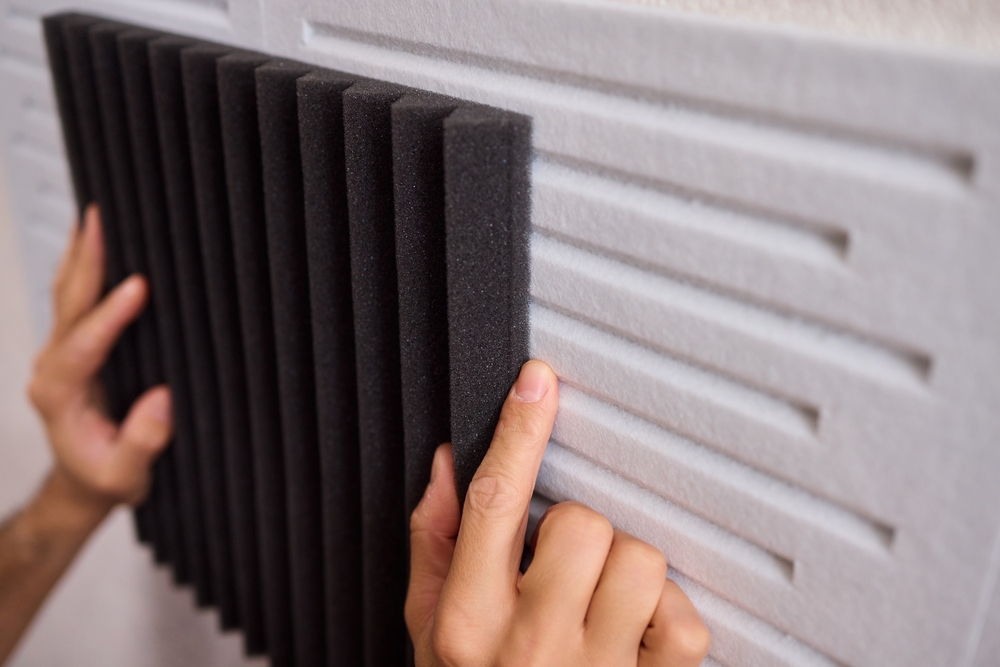
Foam alone helps. But acoustic soundproofing panels are shaped to trap specific sound ranges, especially the irritating mid and high frequencies that wake people at night.
These panels usually feature grooves, wedges, or perforated faces that scatter sound into tiny pockets. Once sound is caught there, it loses energy.
Most people install these panels in visual patterns, but the pattern is less important than placement. Start near the bed wall. Then move outward.
Use acoustic soundproofing panels again across the opposite wall or ceiling edge if noise remains stubborn.
A Simple Night-Noise Layout
Here is a practical bedroom setup that works in small city apartments.
| Area | Treatment |
| Road-facing wall | Full-height foam strip behind curtains |
| Headboard wall | Dense foam tiles in a horizontal band |
| Ceiling corners | Two rows of triangular foam |
| Side wall | One column of acoustic soundproofing panel |
This layout does not crowd the room, yet it shifts the sound profile dramatically.
Real Sleep Gains People Report
After two to three weeks, most notice changes that feel subtle at first.
- Falling asleep feels quicker
- Fewer sudden wake-ups
- Mornings feel less foggy
- Dreams feel deeper and longer
The room sounds different. Not quieter in the usual sense, but calmer. Like the world is happening farther away.
What Foam Cannot Fix
Honest, truth helps here.
Foam cannot block a truck horn right outside the window. That requires sealing gaps or upgrading windows. Foam does, however, keep those sounds from exploding inside your room. It makes the noise less aggressive.
Think of it as smoothing rough edges rather than erasing reality.
Mistakes That Waste Results
People often sabotage good materials with small errors.
- Placing foam too high on the wall and leaving the bed-level bare
- Treating only one surface and ignoring corners
- Covering vents or air gaps, which traps moisture
- Using thin decorative foam that looks good but absorbs little
Sleep comfort comes from how the room works, not how it looks.
Beyond the Bedroom
Once people feel the difference, they start noticing noise everywhere.
Living rooms feel more relaxed. Home offices become easier to focus in. Even the hallways stop echoing.
Sound control spreads calm across the home. One room leads to another.
The Quiet Habit
Noise stress rarely announces itself. It creeps in. You blame caffeine. You blame screens. You blame age.
Then you change the room, and suddenly you wake up lighter. That is when it clicks. The room was talking to your nervous system every night.
Good sleep is not only about the bed. It is about what the walls are doing while you rest.
Conclusion
City living will never stop being loud, but the bedroom does not need to join the chaos. With thoughtful placement, noise insulation foam reshapes harsh sound into something the body can ignore again. That quiet shift restores deep rest night after night.
As a leader in foam innovation, Sheela Foam continues to extend its material science across everyday comfort products, from sleep environments to items such as memory foam for shoes, proving that how foam behaves shapes how people feel.