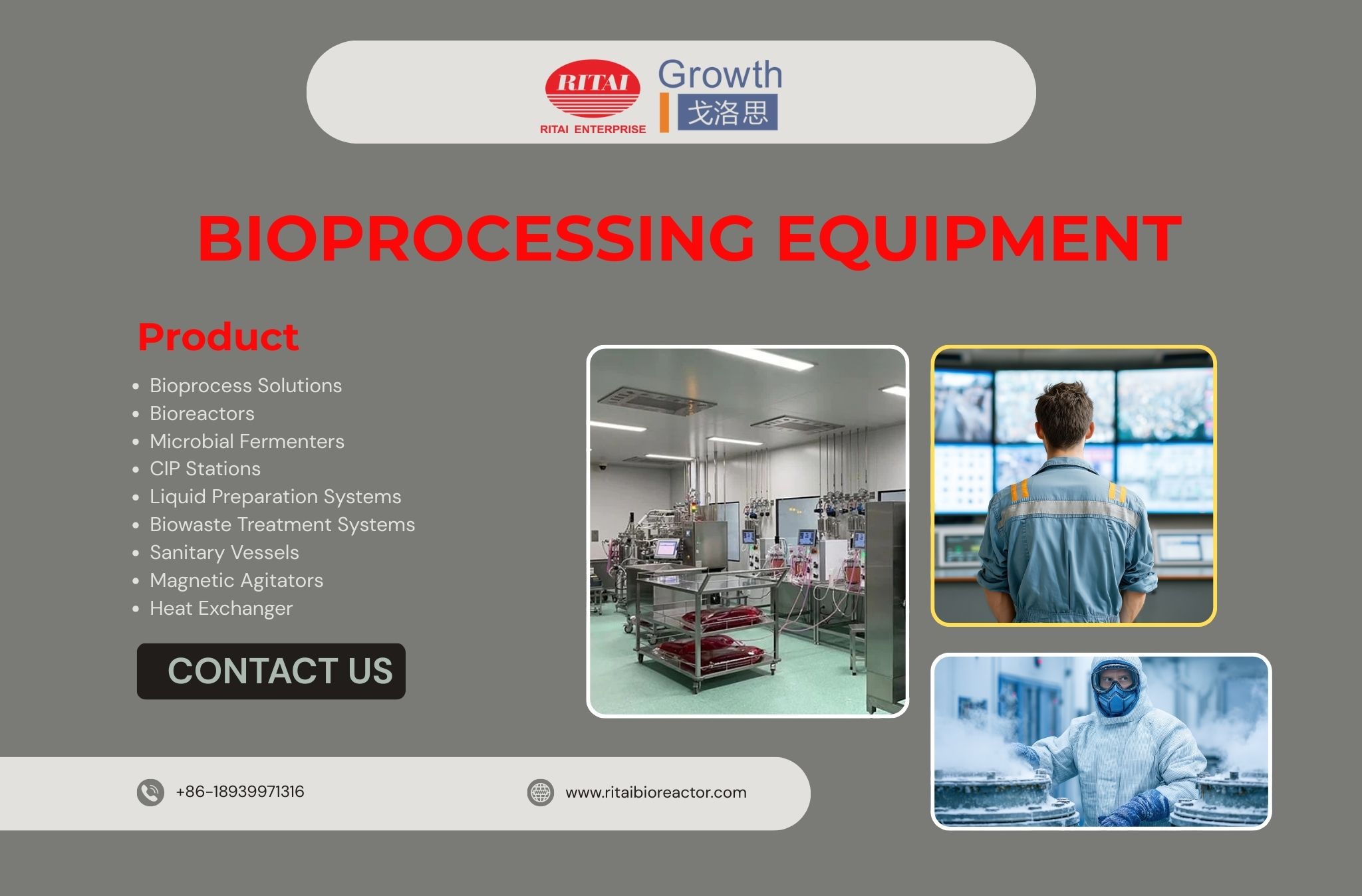
Walk into any modern biomanufacturing site and you’ll see the same story play out: the science is strong, the cell line is promising, but timelines slip because the hardware decisions weren’t made with scale, cleaning, data, and supply chain reality in mind. I’ve seen teams spend months optimizing media, then lose weeks chasing foaming, oxygen transfer limits, or sensor drift that were baked into the original Bioreactor Design and the surrounding Bioprocessing Equipment choices.
This guide is meant for the people who actually have to make those calls—process engineers, MSAT, manufacturing leads, and anyone responsible for a process that needs to run on Monday morning, not just look good on a slide.
Start With the End in Mind: What “Good” Looks Like in Production
Before comparing vendors or drawing P&IDs, define what success means for your facility and product. In real plants, the best Bioprocessing Equipment is the set that hits quality targets consistently, survives audits, and doesn’t trap the team in a maintenance spiral.
A practical checklist for “good” includes:
- Stable yields across batches (not hero runs)
- Predictable turnaround time between lots
- Cleanability that matches your SOPs (CIP/SIP where needed)
- Data integrity and traceability (21 CFR Part 11 style expectations)
- Consumables and spare parts you can actually source
- A Bioreactor Design that supports your biology, not fights it
If those outcomes are clear, your equipment selection gets much easier.
Bioprocessing in Equipment Basics: The Core System Stack
When people say Bioprocessing Equipment, they often picture the bioreactor only. In practice, the reactor is just the center of a full system stack:
- Upstream hardware: seed train vessels, production bioreactor, gas mixing, agitation, temperature control
- Downstream hardware: centrifugation or depth filtration, chromatography skids, UF/DF systems
- Utilities and hygiene: WFI loops, clean steam, CIP/SIP skids, HVAC classification where relevant
- Automation and analytics: PLC/SCADA, historians, alarms, electronic batch records, PAT tools
The “best” Bioprocessing Equipment is the set that works together without constant custom scripting or adapter plates. Integration matters more than brochure specs.
What Makes a Bioreactor Design Work (or Fail) at Scale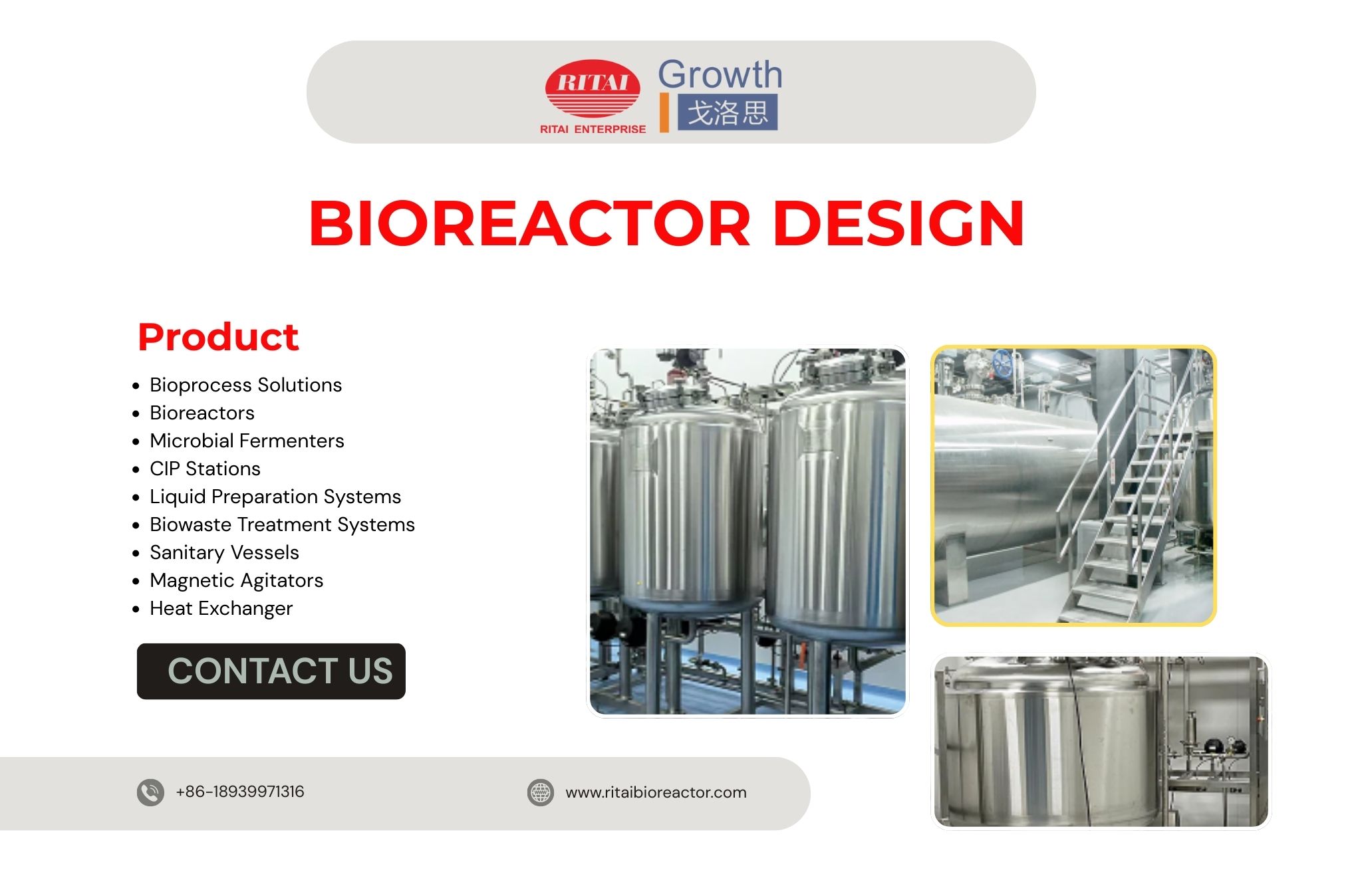 A strong Bioreactor Design is less about fancy geometry and more about controlling the basics: mixing, mass transfer, heat transfer, and sterility.
Mixing: Uniformity Without Beating Up Cells
For microbial processes, you can push power input hard. For mammalian cells, you’re balancing mixing and shear. A solid Bioreactor Design gets you fast homogeneity (pH and feed distribution) without damaging viable cell density.
Real example: if your feed line dumps into a dead zone, you can get local osmotic shock even if your bulk osmolality looks fine. That’s a Bioreactor Design issue, not a media issue.
Oxygen Transfer: Don’t Guess the kLa
Oxygen is the classic scale-up trap. A lab reactor can mask problems because surface-to-volume ratios are forgiving. At pilot and production scale, kLa limits show up quickly.
If your Bioreactor Design relies on high agitation to hit DO targets, you might be trading oxygen transfer for shear, foaming, and higher heat loads. If you design for efficient sparging and gas transfer early, your Bioprocessing Equipment won’t force process compromises later.
Heat Removal: The Quiet Constraint
Large reactors generate significant metabolic heat. If your jacket or coil capacity is marginal, your temperature control will drift during high productivity phases. That impacts glycosylation, growth rates, and impurity profiles—things QA will care about.
A practical Bioreactor Design plan includes heat transfer calculations, not just “the vendor says it’s fine.”
Stainless vs Single-Use: Make the Decision With Ops, Not Opinions
This is where Bioprocessing Equipment discussions can get emotional. The right choice depends on your product mix, changeover frequency, cleaning validation appetite, and capex vs opex constraints.
Stainless Systems
Pros:
- Long-term cost advantages at high utilization
- Robust for aggressive cleaning
- Mature validation expectations
Cons: - CIP/SIP complexity and downtime
- Higher upfront capex
- Facility utilities must be strong
Single-Use Systems
Pros:
- Faster changeover, lower cross-contamination risk
- Great for multi-product facilities
- Less dependency on clean utilities
Cons: - Consumable supply chain risk
- Bag integrity and leachables/extractables work
- Waste handling and storage logistics
A smart Bioprocessing Equipment strategy sometimes mixes both: single-use in seed train, stainless at production scale, or the reverse depending on volumes and timelines. And regardless of platform, the Bioreactor Design must be validated for mixing and oxygen transfer at your target scale.
Sensors, Automation, and Data Integrity: The Part People Under-Budget
You can buy premium vessels and still run a messy process if the analytics and controls aren’t engineered well. High-quality Bioprocessing Equipment should support stable control loops for pH, DO, temperature, agitation, and feed strategies.
Key points to evaluate:
- Sensor type: optical DO vs polarographic, single-use pH vs reusable probes
- Calibration workflow: how painful is it on the floor?
- Drift and lifetime: how long before signals become unreliable?
- Audit trails and permissions: your QA team will check this
- Alarm management: too many alarms is as bad as none
A good Bioreactor Design includes sensor placement that avoids bubbles, stagnant regions, and splashing artifacts. I’ve seen DO probes read “fine” while cells were oxygen-limited because the probe sat in a gas-rich zone.
Materials of Construction, Cleanability, and GMP Reality
In regulated manufacturing, Bioprocessing Equipment isn’t “done” when it installs. It’s done when it’s qualified and can be cleaned repeatedly without surprises.
Ask these questions early:
- Do you need CIP/SIP, or will you run single-use assemblies?
- Are there dead legs in piping that complicate cleaning?
- Are elastomers and gaskets compatible with your cleaning agents?
- Can you disassemble critical points for inspection?
- Is the surface finish appropriate for the product and cleaning strategy?
The Bioreactor Design should also consider harvest and drain performance. If you can’t drain well, your turnaround time will suffer, and you’ll end up with extra flushing steps that nobody planned for.
Scale-Up Strategy: Align Equipment With Your Tech Transfer Path
Scale-up isn’t just increasing volume. It’s managing what stays constant: power per volume, tip speed, kLa, mixing time, and gas flow regime.
If your process will move from 2 L to 50 L to 500 L to 2,000 L, your Bioprocessing Equipment should support a coherent scale-up model. If each step uses a totally different Bioreactor Design, you’ll spend more time re-learning hydrodynamics than improving the product.
A practical move: pick a vendor family where the geometry and impeller configuration are consistent across sizes. That consistency reduces surprises during tech transfer.
Vendor Evaluation: What to Ask Beyond the Datasheet
When comparing Bioprocessing Equipment, you’re also buying service quality, documentation, and responsiveness.
Ask for:
- FAT/SAT scope and typical timelines
- IQ/OQ documentation quality (and examples)
- Spare parts lead times and recommended spares list
- Training package: operators and maintenance
- Change control process for firmware/software updates
- References from facilities running similar processes
For Bioreactor Design, request mixing and mass transfer characterization data at relevant scales, not just generic curves. If they can’t provide meaningful characterization, you’re taking on extra development risk.
Common Mistakes I’ve Seen (So You Don’t Repeat Them)
- Picking Bioprocessing Equipment based on maximum volume, then realizing the working volume and headspace don’t match the process.
- Treating Bioreactor Design as a mechanical decision, ignoring biology-driven constraints like shear sensitivity and oxygen demand.
- Underestimating consumables logistics for single-use assemblies.
- Over-customizing automation early, then struggling to maintain it through upgrades.
- Not involving QA/validation until the end—leading to rework on documentation and cleaning validation.
Avoiding these isn’t about being perfect. It’s about being realistic and designing for the shop floor.
Final Take: Build a System You Can Run Repeatedly
The goal isn’t to buy the fanciest Bioprocessing Equipment. The goal is to select Bioprocessing Equipment that matches your process risks, facility strategy, and regulatory obligations—while choosing a Bioreactor Design that supports consistent mixing, oxygen transfer, and control at your target scale.
If you do this well, your process development work actually carries forward into manufacturing. Batches become predictable. Deviations drop. And your team spends more time improving the product and less time fighting the hardware.