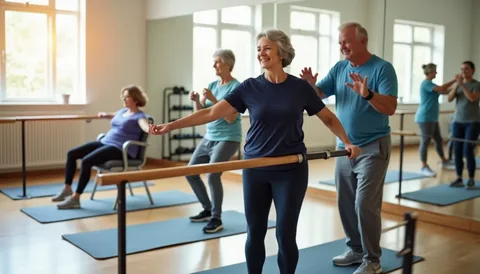
One of the major pillars of healthy aging is stability maintenance. The changes in the body with age may result in a gradual reduction of strength, coordination, and reaction speed. For this reason, the seniors’ balance exercises have a crucial place in daily safety and confidence. Professional guidance from geriatric physiotherapy along with practical fall prevention tips can be a support for long-term independence and improvement in overall mobility. The right approach can help the older adults remain to be active, steady, and self-assured practitioners of their daily lives.
Understanding Balance and the Aging Body
Balance requires the muscles, joints, vision, and inner ear to work together. Due to aging, these systems may not have the same efficiency in communicating with each other. The regular balance exercises for seniors help in re-training the body to become quick and precise in responding to changes in position. If practiced consistently, these movements will also support posture, coordination, and mobility improvement, thereby making everyday activities like walking or getting up from a chair effortless.
Why Balance Declines With Age
Reduced stability is caused by a variety of factors such as weak muscles, stiff joints, delayed reflexes, and some medications. In addition, changes in vision and chronic diseases can lead to a decrease in one’s spatial awareness. Thus, by learning about the causes of falls, senior citizens, and caregivers can co-partner in utilizing early fall prevention tips that would eventually reduce the risk of injuries that might affect the elderly person’s independence.
Core Balance Exercises to Practice Regularly
A strength, coordination, and flexibility regimen that is holistic would be the best approach. Among the very simple balance exercises that can be done by the elderly are standing on one foot while holding a chair, walking heel to toe, leg lifts while sitting, and gentle leg raises to the side. They keep activating the core muscles and controlling the lower part of the body to the point that mobility can be improved gradually without the joints being excessively strained.

Safety, Consistency, and Confidence
Consistency took precedence over intensity. A daily workout consisting of short periods was often more effective than an occasional long workout. Regular movement accompanied by simple fall prevention measures, like proper lighting at home and the use of handrails, increases the safety of the seniors. A professional assessment is a great advantage to the elderly, where geriatric physiotherapy works to determine the individual’s limitations and adapt exercises to the latter’s needs.
The body must be listened to. Dizziness, pain, or other unusual discomfort should not be left unattended but should be treated immediately. Besides, staying hydrated and doing warm-up exercises before working out help the muscles to function properly and lower the chance of injury.
The Role of Professional Support
The involvement of a skilled professional can greatly increase the effectiveness of treatment. Geriatric physical therapy deals with the physical changes that come with aging and devises a tailored plan which comprises balance training for the elderly based on their capabilities. The therapist checks the patient’s progress, alters the exercises, and makes sure that the movements are being done properly, thus giving the patient confidence and assuring success in the long run.
Having a professional to guide one through the recovery process is very advantageous especially for patients who have undergone surgery, have had an illness, or have had falls. It is through expert supervision that elderly people can gradually regain their strength in a safe manner while at the same time being motivated and consistent.
Lifestyle Habits That Support Stability
Apart from physical activities, everyday practices play a significant role in the development of balance and coordination. A balanced diet, for instance, nourishes the muscles while having one’s sight and hearing checked regularly enhances the perception of space. Movement through walking, gardening, or light stretching can lead to the continual improvement of one’s mobility. Adding these practices together with the practical fall prevention tips creates an atmosphere where safe movement is possible.
Advanced Support Tools and Techniques
The therapists may use a variety of devices during some procedures to facilitate the outcomes. Under the supervision of professionals, the balance exercises for the elderly can be associated with the innovations from geriatric physiotherapy like using the taping method as support. Under these circumstances, Kinesio tape may act as a gentle support for the muscles and giving them sensory feedback, thus, making one aware of the posture and controlling the movement while slowly improving mobility.
Long-Term Stability and Independence
Sustainable development is obtained by the mix of regular practice, expert guidance, and mindfulness habits. The daily basis with balance exercises for seniors, applying reliable fall prevention tips, and getting assistance from geriatric physiotherapy specialists build a fort for healthy aging. In the most critical stages of treatment, Kinesio taping may possibly be used again as the comfort and confidence of the patient are supported and the mobility improvement is reinforced as part of a bigger plan. With the right support and determination, older adults can continue to live their life with strength, balance, and autonomy.