
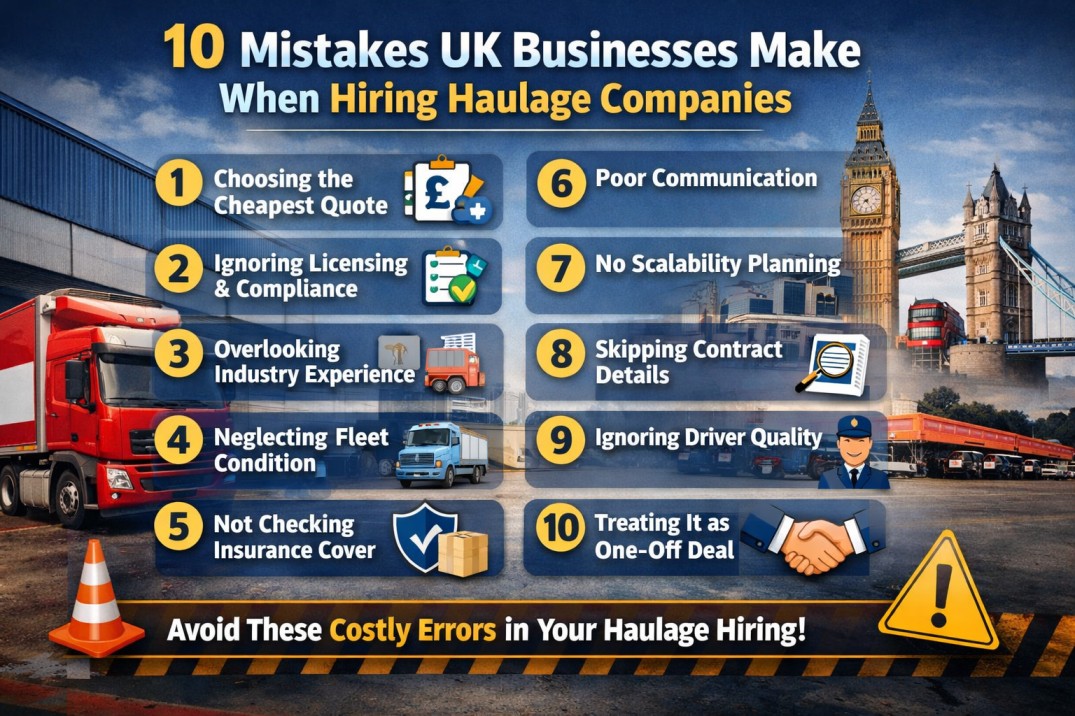
After two decades of working closely with logistics managers, fleet operators, and business owners across the UK, one pattern keeps repeating: companies often choose haulage providers in a rush, only to face hidden costs, delays, damaged goods, and frustrated customers later. In today’s competitive market, where next-day delivery expectations are high and margins are tight, the wrong haulage decision can quietly drain profit and damage your reputation.
This in-depth guide breaks down the 10 most common mistakes UK businesses make when hiring haulage companies, along with practical advice to help you avoid them and build a reliable long-term logistics partnership.
1. Choosing the Cheapest Quote Without Checking Value
Price matters, but choosing the lowest quote alone is one of the biggest mistakes businesses make. A cheaper rate often means compromises in vehicle quality, driver experience, insurance cover, or delivery reliability.
Instead of focusing on cost alone, look at the full service package. Ask what’s included in the price: fuel surcharges, waiting time fees, tail-lift usage, or multi-drop charges. A slightly higher quote that offers transparency and reliability usually saves money in the long run.
2. Ignoring Operator Licensing and Compliance
In the UK, haulage companies must hold a valid Operator’s Licence and comply with regulations on vehicle safety, driver hours, and maintenance standards. Many businesses fail to verify this.
Working with non-compliant providers exposes your business to legal risks and reputational damage. Always confirm that the haulage company is fully licensed, insured, and compliant with DVSA standards. Compliance is not paperwork—it’s your safety net.
3. Overlooking Industry-Specific Experience
Not all haulage companies are suited to every type of cargo. Transporting construction materials is very different from handling temperature-sensitive food products or fragile retail goods.
UK businesses often make the mistake of hiring general hauliers without checking if they have experience in their sector. Ask about previous clients, specialist equipment, and handling processes. Industry knowledge reduces mistakes, delays, and damage.
4. Failing to Assess Fleet Condition and Technology
Outdated vehicles and poor tracking systems can lead to breakdowns, missed delivery windows, and limited visibility of your shipments.
A professional haulage company should maintain modern, well-serviced vehicles and use GPS tracking or transport management systems. This allows you to monitor deliveries, plan better, and communicate accurate timelines to your customers. Technology is no longer optional—it’s a competitive advantage.
5. Not Clarifying Insurance Coverage
Many businesses assume that all haulage companies provide full protection for goods in transit. This assumption can be costly.
Always confirm what level of insurance is included and whether it matches the value and type of your cargo. For high-value goods, additional cover may be required. Clear insurance terms protect both parties and prevent disputes if something goes wrong.
6. Ignoring Communication Standards
Poor communication is one of the most common complaints in UK logistics. Late updates, unclear delivery times, and slow responses create unnecessary stress.
Before signing a contract, test the company’s responsiveness. Do they answer calls promptly? Do they provide dedicated account managers or real-time updates? A haulage provider that communicates well becomes an extension of your business rather than just a transport supplier.
7. Overlooking Scalability and Future Growth
Many UK businesses hire haulage companies based only on current needs. But what happens when order volumes increase, new locations are added, or seasonal demand spikes?
Choosing a provider without scalable capacity can create bottlenecks. Look for companies that can grow with you, offer flexible fleet sizes, and handle peak periods such as Christmas, Black Friday, or summer demand surges.
8. Not Reading the Fine Print in Contracts
Contracts often contain hidden charges, strict cancellation policies, or limitations on liability. Businesses sometimes sign agreements without fully understanding the terms.
Take time to review service-level agreements, payment terms, penalty clauses, and delivery commitments. If something is unclear, ask questions. A transparent contract builds trust and avoids unpleasant surprises later.
9. Underestimating the Importance of Driver Quality
Drivers represent your brand on the road and at delivery points. Yet many businesses fail to consider driver professionalism when selecting a haulage company.
Experienced, well-trained drivers reduce delivery errors, handle goods carefully, and interact professionally with customers. Ask about driver training, background checks, and health and safety policies. Good drivers protect your reputation as much as your cargo.
10. Treating Haulage as a One-Off Transaction
One of the biggest long-term mistakes is viewing haulage as a short-term service rather than a strategic partnership.
Strong logistics relationships lead to better pricing, improved service levels, priority scheduling, and smoother operations. UK businesses that invest in long-term partnerships often experience fewer disruptions and greater efficiency.
How to Choose the Right Haulage Partner in the UK
Avoiding these mistakes starts with a smarter selection process. Here are some practical steps to follow:
-
Request detailed quotes with full cost breakdowns
-
Verify licensing and compliance before committing
-
Ask for references or case studies from similar industries
-
Inspect fleet standards and tracking systems
-
Confirm insurance coverage for your cargo type
-
Assess communication and customer support
-
Choose scalable providers who can support future growth
By following these steps, you move from reactive decision-making to strategic logistics planning.
Why the Right Haulage Choice Matters More Than Ever
The UK logistics sector is evolving rapidly. Rising fuel costs, environmental regulations, congestion charges, and customer delivery expectations have made transport more complex than ever before.
Your haulage provider is no longer just moving goods from point A to point B. They are part of your supply chain strategy. The right partner improves delivery speed, reduces operational stress, enhances customer satisfaction, and protects your profit margins.
Final Thoughts
After 20 years in the content and logistics research space, one truth stands out: most haulage problems are avoidable with better planning and smarter choices.
UK businesses that take time to evaluate providers, understand contracts, prioritise quality over price, and build long-term partnerships consistently outperform those who chase quick deals.
If you want smoother deliveries, fewer disruptions, and happier customers, avoid these ten mistakes and treat your haulage decision as a strategic investment—not just another expense line on your budget.